Exhaust Residue
Membrane Softened By Fans
Grease and chemical residue from exhaust fans soak into the membrane around the curb until it swells and splits.

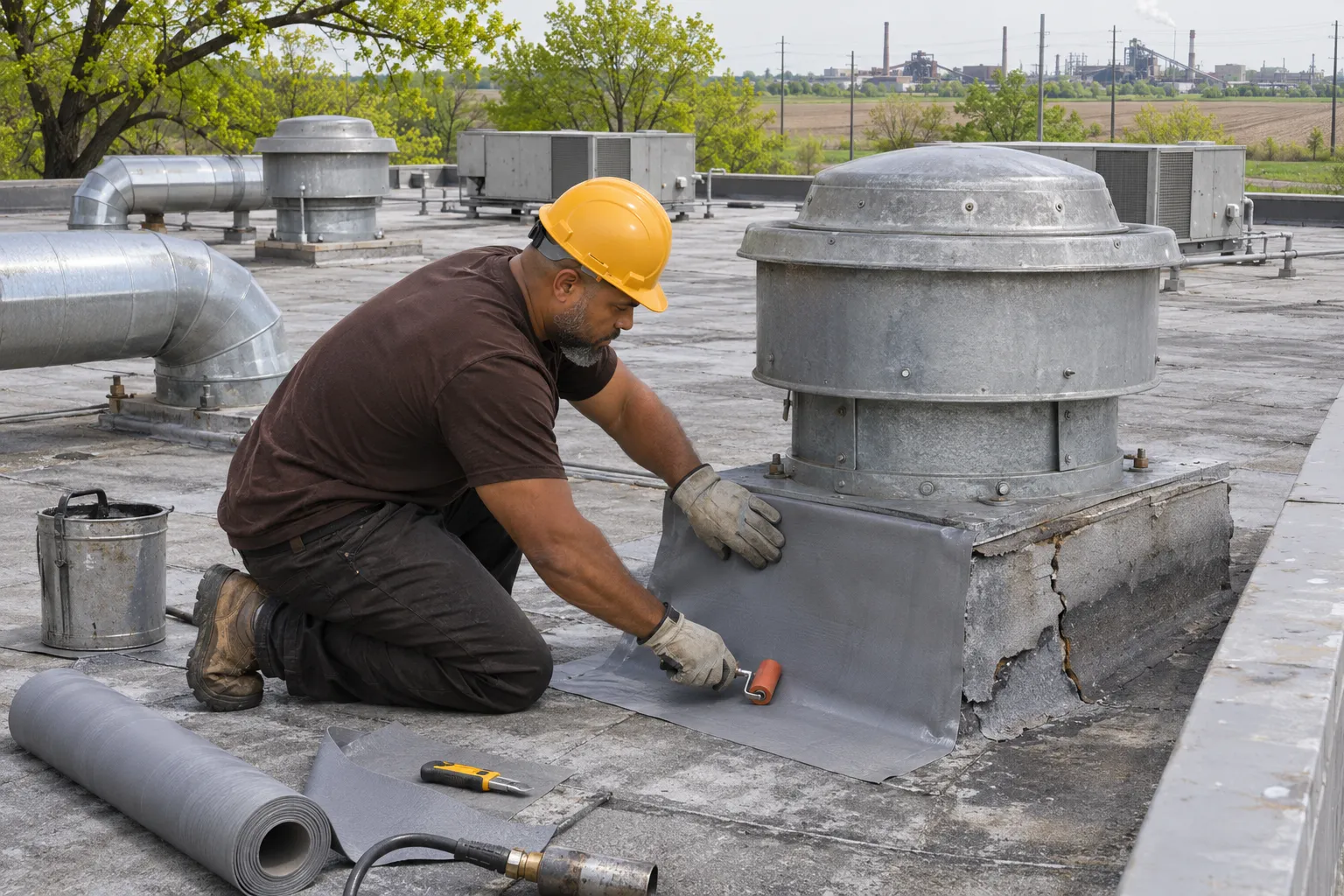
As a Portage industrial roof repair contractor, we repair flashing, membrane, and joints on plant roofs and schedule the work around production and safety rules.
Portage industrial roof repair handles the busy parts of a plant roof. This table shows when a repair holds and when a section needs replacing.
| Area | Repair Fits | Plan A Section Replacement |
|---|---|---|
| Around exhaust fans | Softened membrane in a ring a few feet wide | Residue damage spreading across whole roof bays |
| Curbs and stacks | Flashing split at corners with a firm curb | Rotted curbs or stacks that move when pushed |
| Expansion joints | Joint cover torn in one run | Joint covers failing along their whole length |
| Field membrane | Punctures from foot traffic or dropped tools | Membrane cracking and shrinking across the field |
| Drains | Dust sludge in a few drains | Drains and leaders corroded or crushed across the roof |
Plant roofs carry heat, vibration, residue, and constant service traffic. These are the failures that follow.
Grease and chemical residue from exhaust fans soak into the membrane around the curb until it swells and splits.
Fans and units vibrate all day, working their curb flashing loose at the corners and base.
Heat from process stacks dries the flashing collar, and it cracks where the collar meets the roof.
Technicians crossing the roof to reach equipment wear grooves and punctures along the same paths.
Long plant roofs move at expansion joints, and the covers tear where the building shifts.
Process dust washes into the drains and settles as sludge that slows water and holds it on the roof.
Each repair targets one plant-roof failure, sized to the area it covers.
Residue-soaked membrane is cut out, the curb reflashed, and a residue-resistant sheet or pad added around the fan.
Cracked collars and storm bands are replaced and sealed where the stack meets the deck.
Torn joint covers are replaced along the damaged run and tied into the membrane on both sides.
Pads laid along service paths spread foot traffic so the membrane stops wearing through.
Sludge and dust come out of the drains, and strainers are reset to keep the outlets open.
Residue damage spreads every month it stays on the roof. Book a walk around the fans and stacks before the next season.
A plant roof that holds keeps production, power, and process lines dry.
Sealed curbs and joints keep water off presses, panels, and process lines below.
Removing residue-damaged sheet around fans stops the softening from spreading further out.
Walkway pads and patched punctures give technicians steady footing to their equipment.
Photos and a ranked findings list help you budget the next round of plant roof work.
Plant work runs under your rules for access, permits, and shifts.
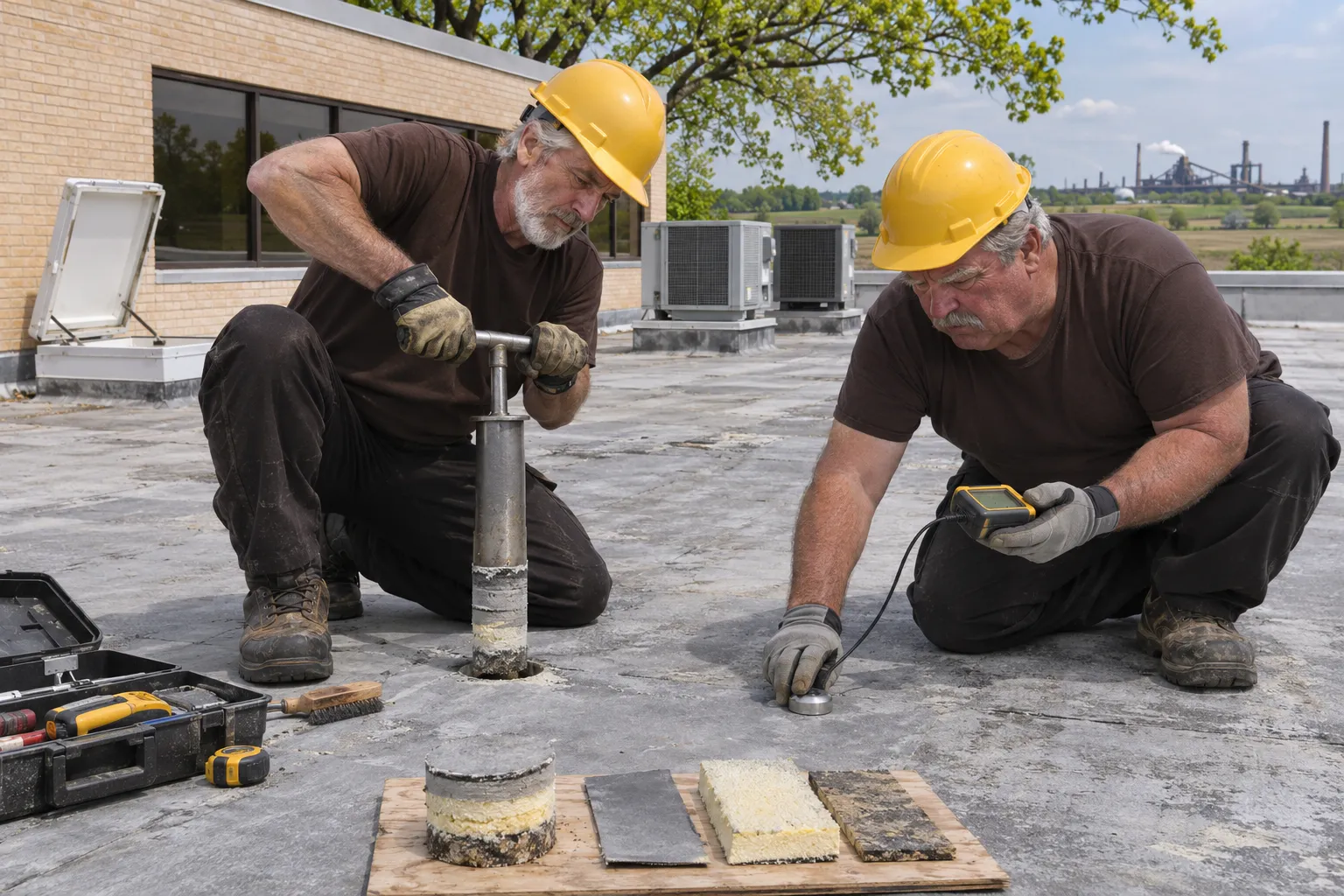
Roof access routes, hot-work rules for torches and welders, lockout needs, and quiet hours are agreed before anyone climbs.
Every fan, stack, curb, and joint gets checked, with residue rings and soft spots measured.
Repairs run section by section on the roof, so fans and units stay online and only the active area of membrane is closed off.
Damaged membrane comes out, curbs and collars are reflashed, and joints get new covers.
Photos and a list of the curbs, seams, and joints fixed, plus what is wearing next, go to the facility manager.
Plants often include office wings, metal storage buildings, and leaks that need tracing first.
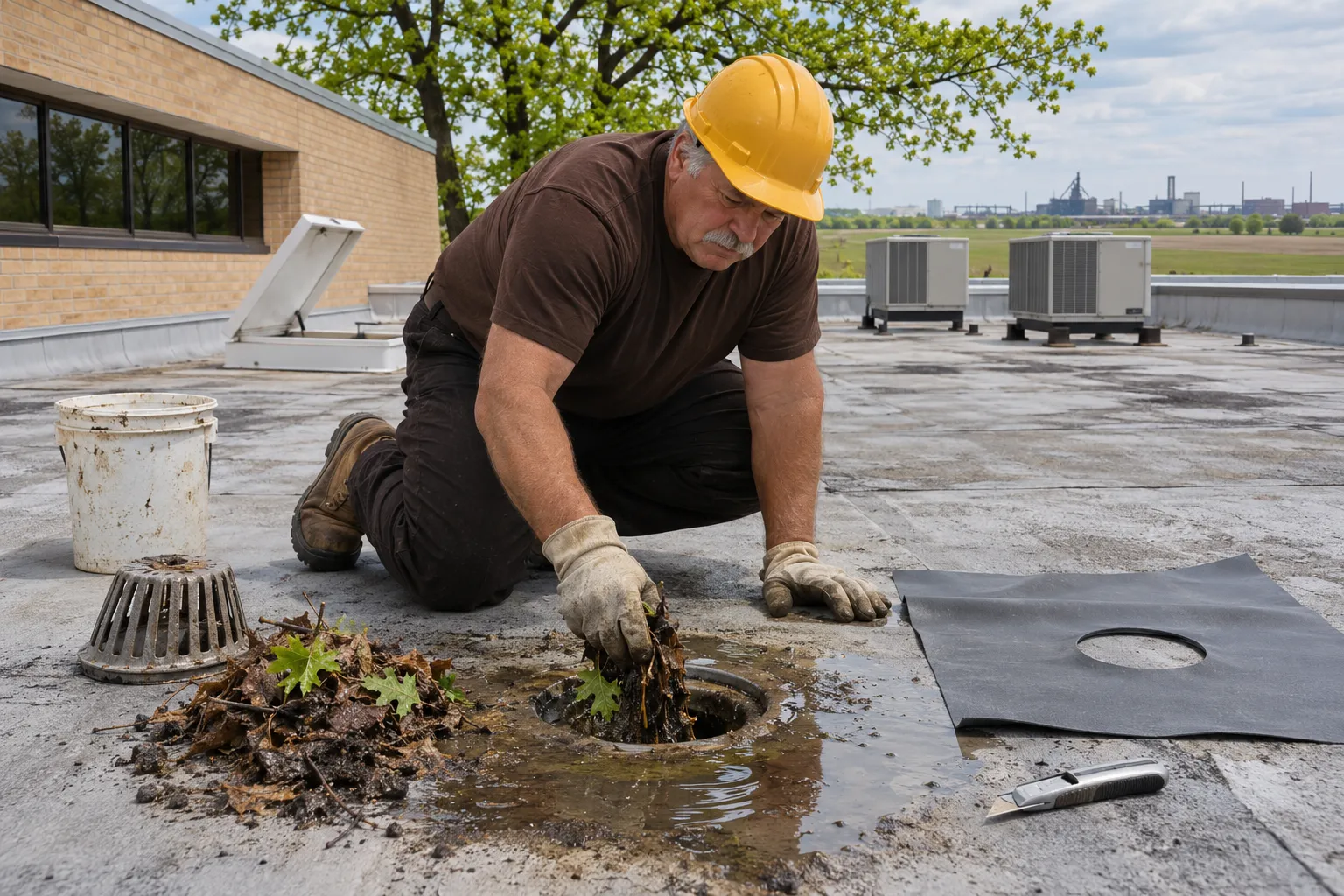
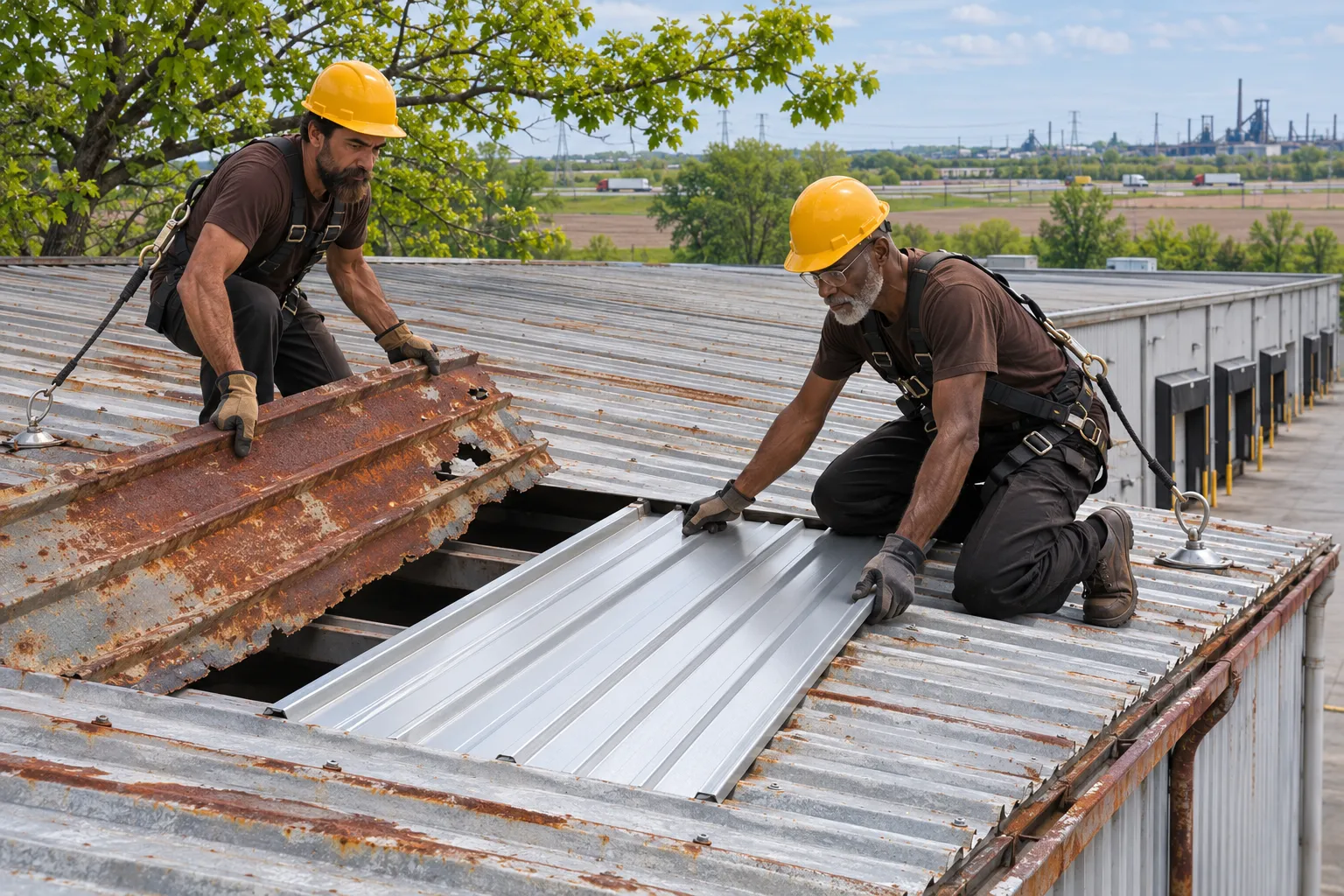
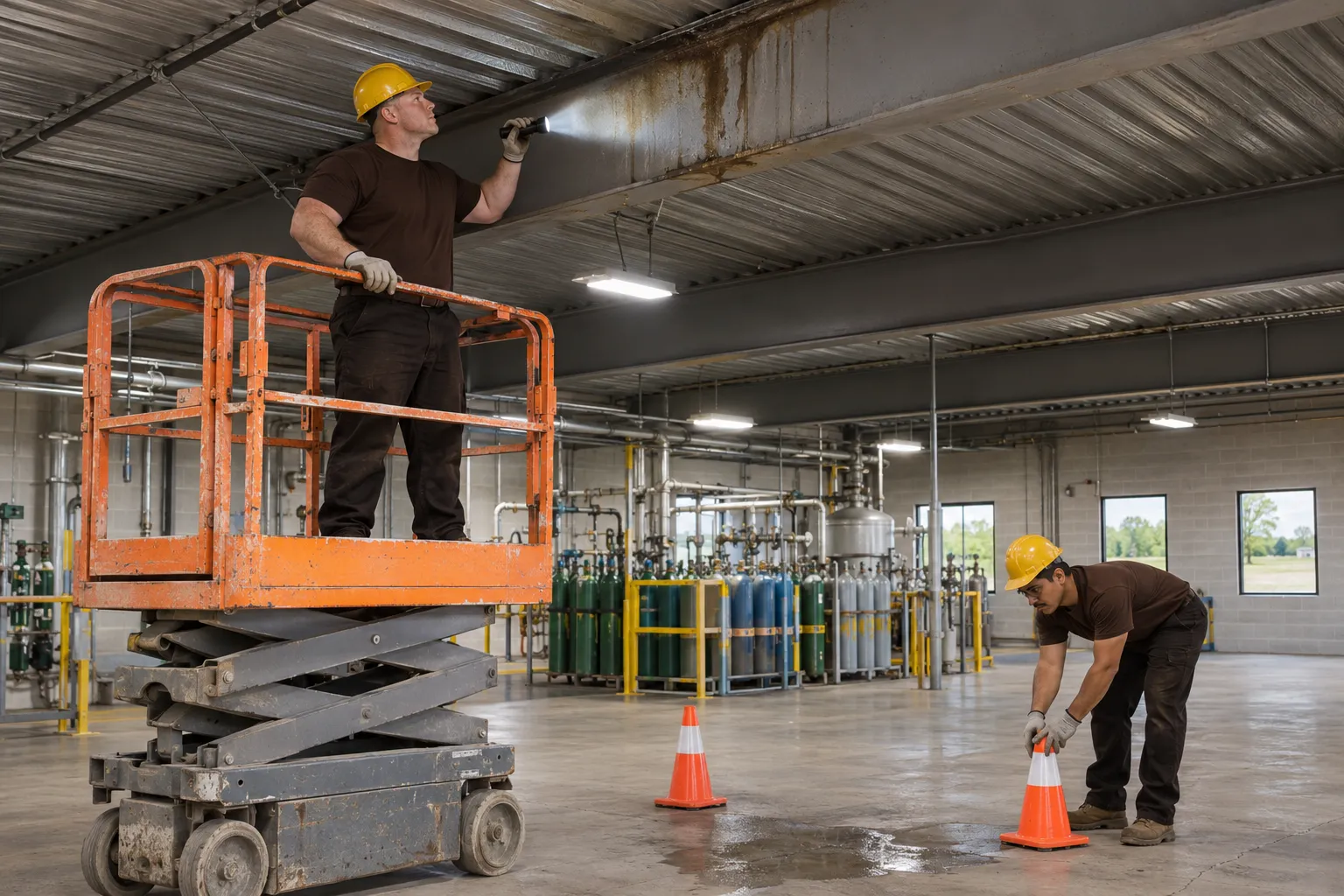
Answers about leaks, exhaust fans, maintenance, and inspections on plant roofs.
It means tracing water across a large roof full of curbs, stacks, and joints, then fixing the membrane, flashing, or panels that failed.
Wet insulation is replaced so the leak does not return. On Portage plants, access and safety rules are set with the facility manager before work starts.
Fans shake their curbs loose and can release residue that softens roofing, so both problems get fixed together.
We repair the curb flashing, reseal the fan base, and replace damaged membrane. A residue-resistant sheet or a protective pad around the fan slows the next round of damage.
Plan inspections every spring and fall, plus a check after major storms.
Maintenance covers clearing drains and gutters, resealing curbs and penetrations, checking seams and flashing, and removing debris and residue. Pre-winter work matters most here, since lake-effect snow and freeze-thaw cycles find any opening.
We walk the whole roof and check the membrane or panels, seams, wall and curb flashing, drains, expansion joints, and walkways.
Residue buildup, ponding, and soft spots that hint at wet insulation get noted. You receive photos and a written list ranked by what needs attention first.
Yes, in most cases. Work is split into zones so production lines below keep running and only the active section is closed.
Hot work, lockout, and noise limits are planned with your safety staff, and crews follow the plant's own sign-in and protective equipment rules.
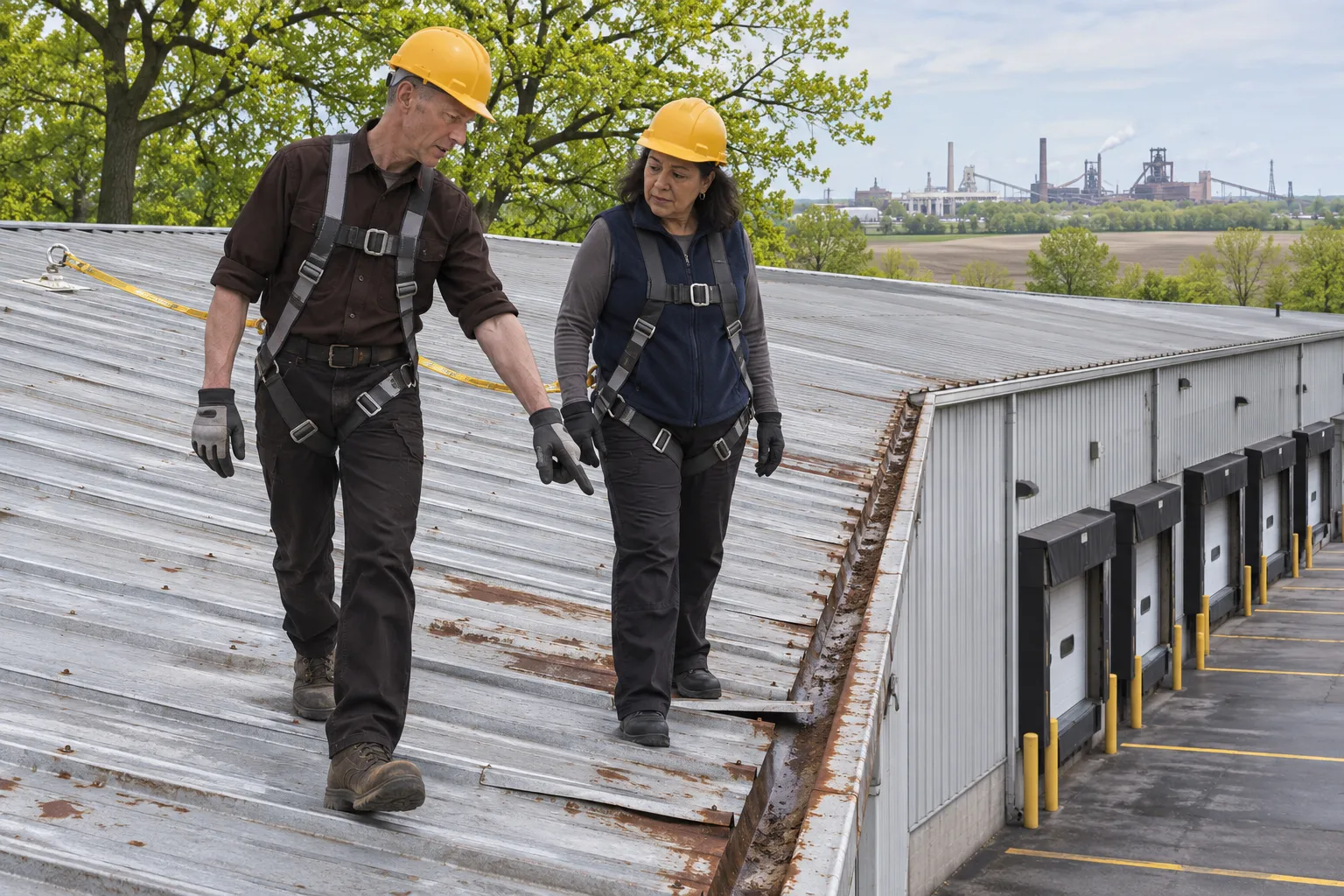
Send the plant address and the equipment areas giving trouble. We will plan access with your team and price the repair.