Edge Metal
Loose Perimeter Edge
Cleats and fasteners holding the edge metal work loose, and the next gust bends the flange up off the roof.

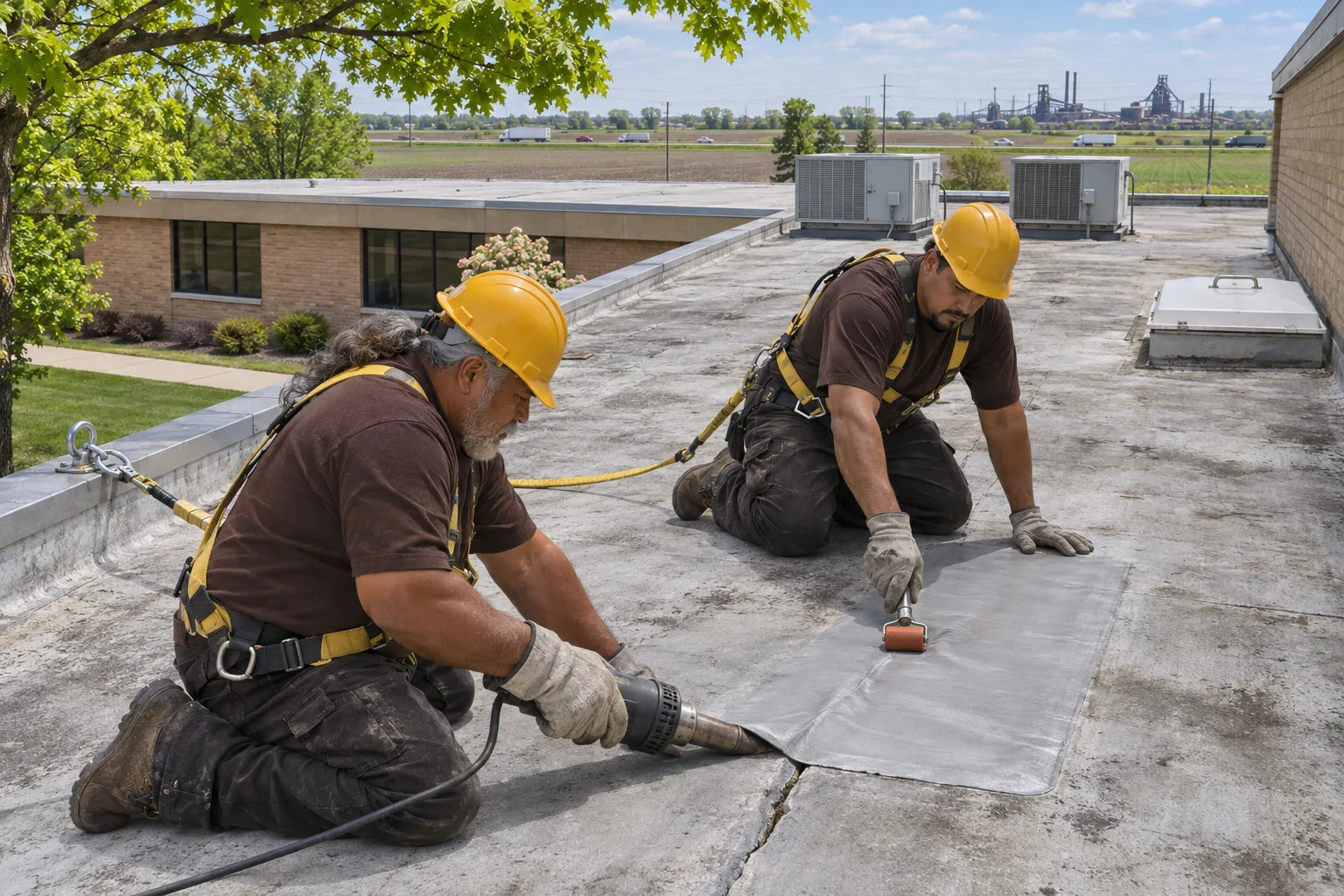
As a Michigan City commercial roof repair contractor, we resecure edge metal, repair wind-lifted membrane, and clear ice-blocked drains on buildings near the lake.
Michigan City commercial roof repair near the lakefront starts at the perimeter, where wind first gets a grip on the roof.
Wind off the water pushes hardest at corners and edges. Once a section of edge metal or coping loosens, gusts get under the membrane and peel it back a little more with each storm, and blown rain follows the lift into the insulation. Caught early, it is a short repair along one run.
We resecure or replace the edge metal, repair the wood blocking behind it, reattach lifted membrane, and core the corners to see whether wind-driven rain has already soaked the insulation. Drains get cleared in the same visit, since winter ice there sends meltwater back under the laps.
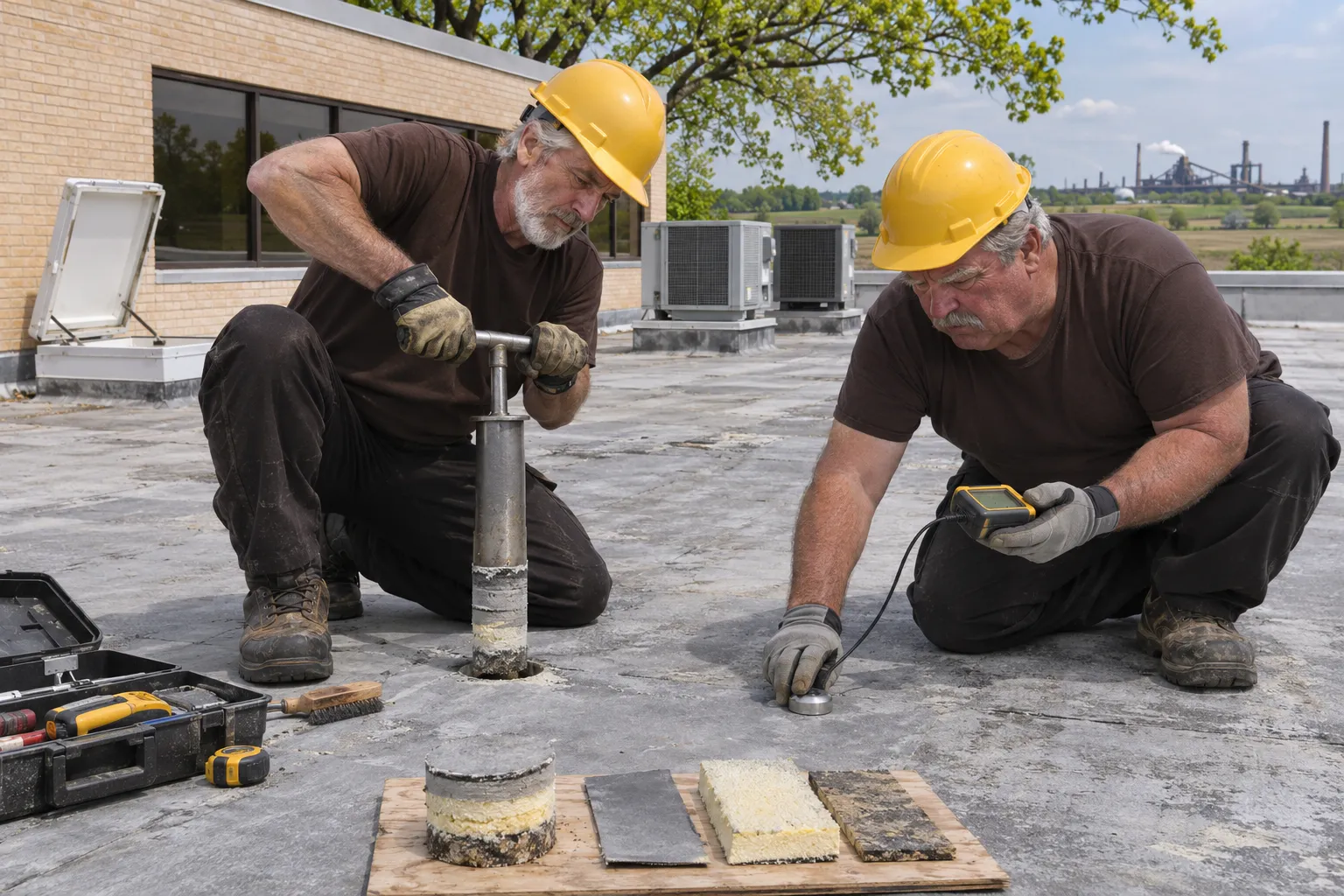
Wind, spray, and lake snow work on the same roof details every year. These are the ones we see most on Michigan City buildings near the water.
Cleats and fasteners holding the edge metal work loose, and the next gust bends the flange up off the roof.
Corners take the highest wind pressure, so membrane lifts there first and lets rain blow under the sheet.
Coping caps on parapet walls separate at their joints, and water runs down into the wall behind the flashing.
Drifted snow melts and refreezes over the drains, trapping meltwater that backs under laps and flashing.
Damp lake air keeps metal trim and fasteners wet longer, so rust spreads along edges and gutters.
Membrane that flutters in wind flexes its laps over and over until the seam edge starts to open.
Some wind damage is a repair; some calls for new perimeter metal. This is how we tell them apart.
| Check | Repair Fits | Replace The Perimeter |
|---|---|---|
| Edge metal | One run bent or loose with solid blocking | Rotted wood blocking behind most of the edge |
| Membrane at corners | Lifted in a few spots, dry underneath | Torn or wet across whole corner zones |
| Coping | A few open joints along the wall | Caps loose along most of the parapet |
| Gutters and trim | Surface rust on short sections | Rusted through along long runs |
| Drains | Strainers missing or clogged with debris | Drain bowls cracked by repeated freezing |
Edge repairs stop small wind damage before it becomes a peeled roof.
Refastened edge metal keeps wind from getting a starting point under the roof.
Reattached corner membrane resists the uplift that tears roofs during lake storms.
Cleared and reset drains give meltwater a path off the roof instead of under the laps.
Photos after each storm repair help with insurance and track how the edge holds up.
Loose edge metal gets worse with every gust. Call and we will plan a visit to secure it.
Building farther out? Call us or send us a message with the address. These towns each have their own page.
Office and multi-building roofs, inspected together in one visit.
Retail strip roofs, repaired around store hours and tenants.
Metal roofs with skylights, ridge caps, and wall flashing.
Older shop roofs with years of patches to sort.
Edge work goes around the perimeter in order, corners first.
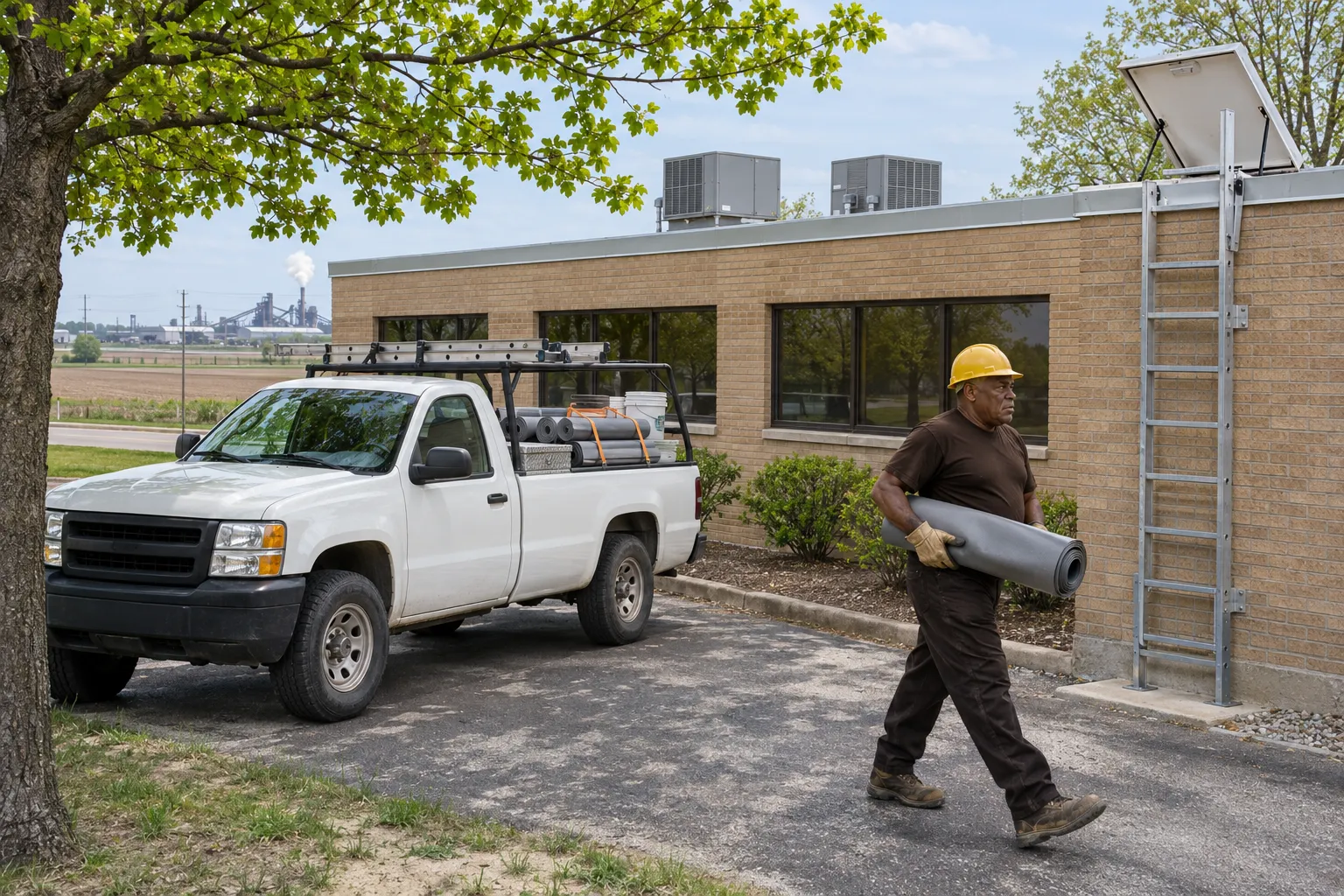
The full roof edge gets checked for loose cleats, bent flanges, open coping joints, and lifted corners.
Small cores at the worst corners show whether wind-driven rain soaked the insulation under the lift.
Edge metal is refastened or replaced, blocking repaired, and coping joints sealed along the wall.
Lifted membrane is cleaned, re-adhered or fastened, and covered with matching patches at the corners.
Photos of each repaired run go to you, marked by side of the building for future storms.
Answers for owners with roofs near the lake.
Yes. Lakefront and near-lake roofs in Michigan City take wind, snow, and moisture, and we repair the damage each one leaves.
Most visits there involve refastening perimeter edge metal, resealing laps and wall flashing, swapping rusted metal panels, and opening drains that ice or blown debris has closed off. Corner membrane gets cored for wet insulation before it is reattached.
Leaks get temporary seals in freezing weather, and permanent membrane welds wait for a dry day above the material's working temperature.
Ice is cleared from drains first so meltwater has somewhere to go while the full repair is scheduled.
Our repair visits come from Portage, along the lakeshore toward Michigan City.
Send the building address and a note on what the wind or snow did, and we will set a time to walk the roof. Photos of the edge from the parking lot help us plan which side to start on.
Ask how they handle edge metal and corners, since that is where lake wind starts most roof failures.
A good contractor cores the corners for wet insulation, photographs each run of edge, and matches the existing membrane.
It helps. Photos of lifted edges, torn membrane, and wet cores taken soon after the storm make a claim easier to support.
We photograph every damaged area before repairing it and keep the images with your roof record. Those images also show how each repaired run holds up through the next winter.
Wind pressure peaks at corners and along the edges, so membrane and edge metal there take the hardest pull in every storm.
Corners get extra fasteners or adhesive in the repair, and we core them to check for water that blew in under the lift.
Damp air off the water keeps trim, gutters, and fastener heads wet for longer stretches, and that speeds rust on bare steel edges.
Treating surface rust early and sealing the cut edges slows it down before the metal thins through.
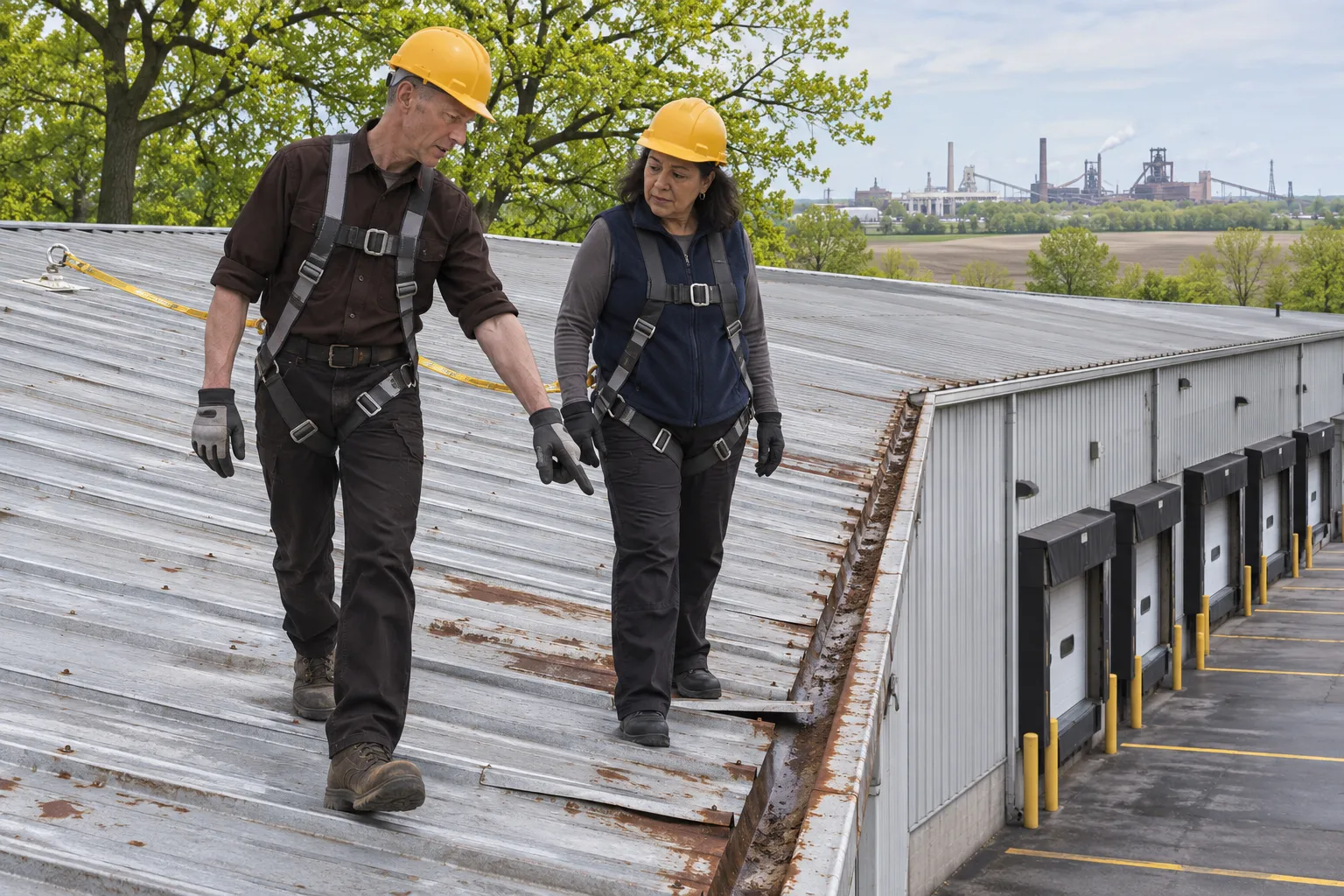
Tell us which side of the building took the wind and what came loose. We will walk the edge and price the repair.