Open Lap
Seams Peeling Back
Heat cycles and foot traffic work a lap loose until the edge lifts and rain runs under the membrane into the insulation.

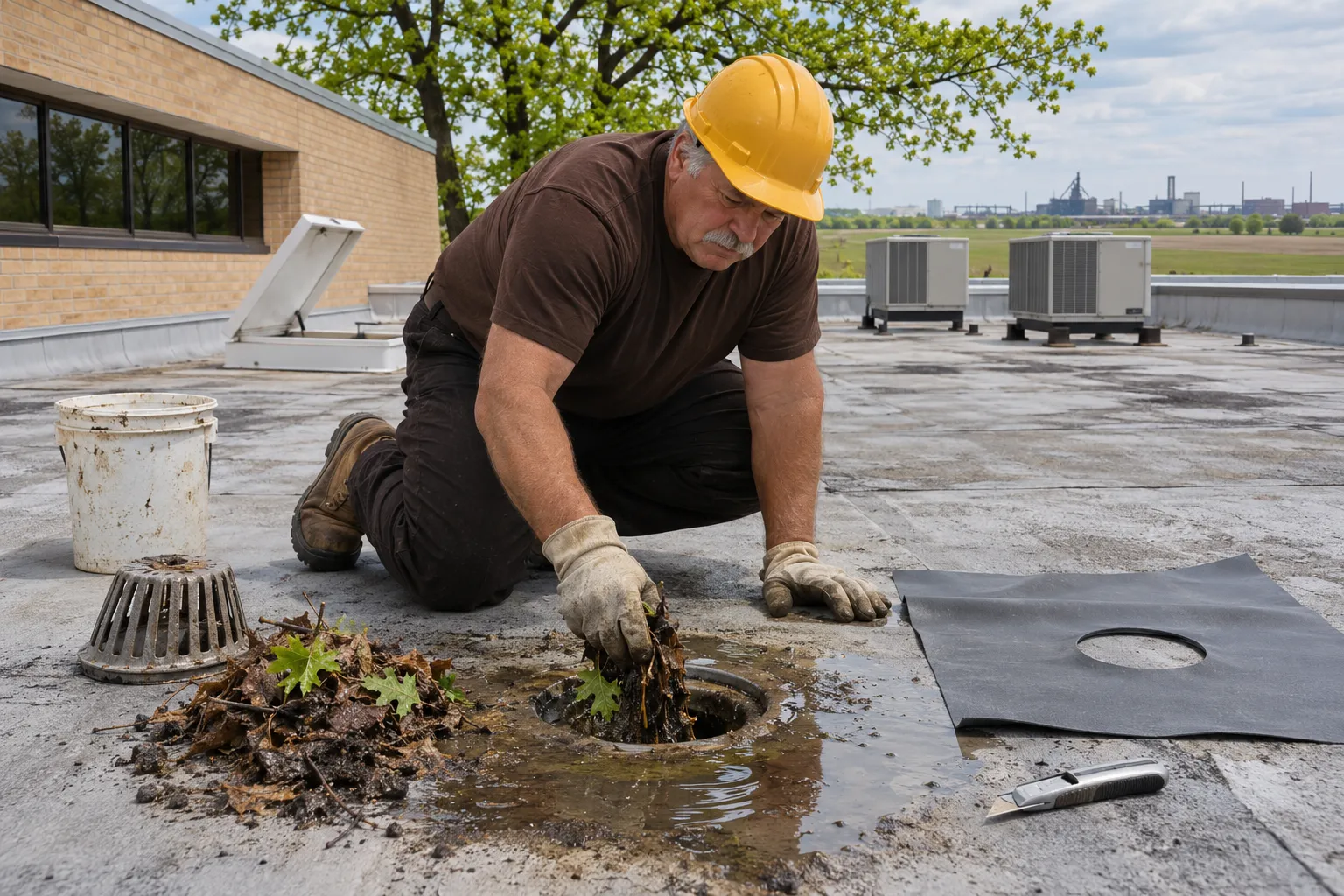
As a Portage flat roof repair contractor, we patch seams, rebuild drains, and correct ponding on TPO, EPDM, and built-up roofs over working buildings.
Portage flat roof repair works best when the trouble sits in a few spots. These checks tell us whether a patch will hold or the roof is ready for more.
| Check | Repair Fits | Look At Replacement |
|---|---|---|
| Membrane feel | Flexible membrane that folds without cracking at a test corner | Brittle sheet that splits when lifted or walked on in cold weather |
| Insulation | Core cuts near the leak come up dry beyond a small area | Moisture readings show wet board through whole bays |
| Ponding | Water collects at one blocked drain or one low spot | Water stands across most of the field after every storm |
| Seams | One or two open laps with clean membrane on both sides | Seams opening in many places along the same run |
| Past patches | A few earlier patches that still bond tightly | Patches layered over patches with water under them |
Low-slope roofs fail at the same handful of details. These are the conditions behind most flat roof calls we answer around Portage.
Heat cycles and foot traffic work a lap loose until the edge lifts and rain runs under the membrane into the insulation.
Leaves and gravel choke the strainer, water rises around the bowl, and it climbs over the flashing ring into the deck.
Crushed insulation and sagging deck make low spots where water sits, adds weight, and wears the membrane surface away.
Trapped moisture swells between plies under summer sun until the blister cracks open and lets more water in.
Membrane flashing shrinks and sags at parapet walls, opening a gap behind the termination bar where wind drives rain.
Lake-effect snow melts by day and freezes at night, so drains clog with ice and meltwater backs under seams.
Each repair below answers one failure. We pick the one that matches what the core cuts and the water test show.
Open TPO laps are cleaned and heat-welded with a matching patch; EPDM seams get primer, seam tape, and a cover strip rolled tight.
Strainers, clamp rings, and missing bolts are replaced, and the membrane is reseated under the ring so the bowl seals again.
Where water ponds, wet board comes out and tapered pieces or crickets go in to tip the water toward the drain.
A blister is cut open, dried, and covered with new plies or a membrane patch sized well past the damaged area.
Loose wall flashing is pulled back, re-adhered, and capped with a new termination bar and sealant at the top edge.
Clearing and resetting a drain is often a short job. Send the address and a photo of the drain area, and we will plan the visit.
A flat roof that drains and seals again keeps the building below dry and the insulation working.
Rebuilt drains and tapered fill move water off the field, so the membrane stops wearing where puddles used to sit.
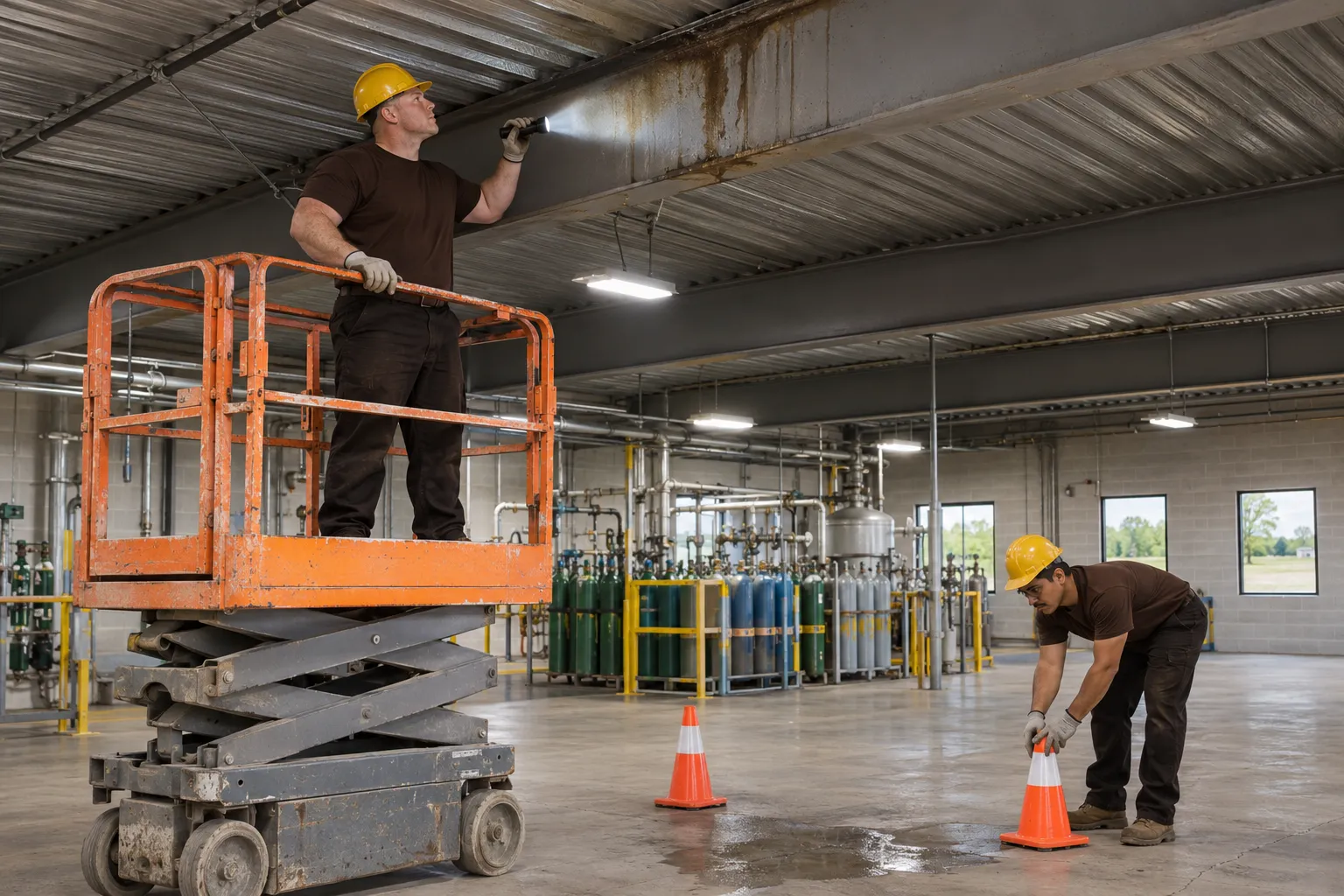
Cutting out wet board stops the slow soak that rusts steel deck flutes and drips onto racking.
Replaced dry insulation holds its heat value again through the winter months.
Fixing two failed seams now leaves room to budget a full reroof years later instead of next month.
Five steps take a flat roof from a drip inside to a sealed, tested repair.
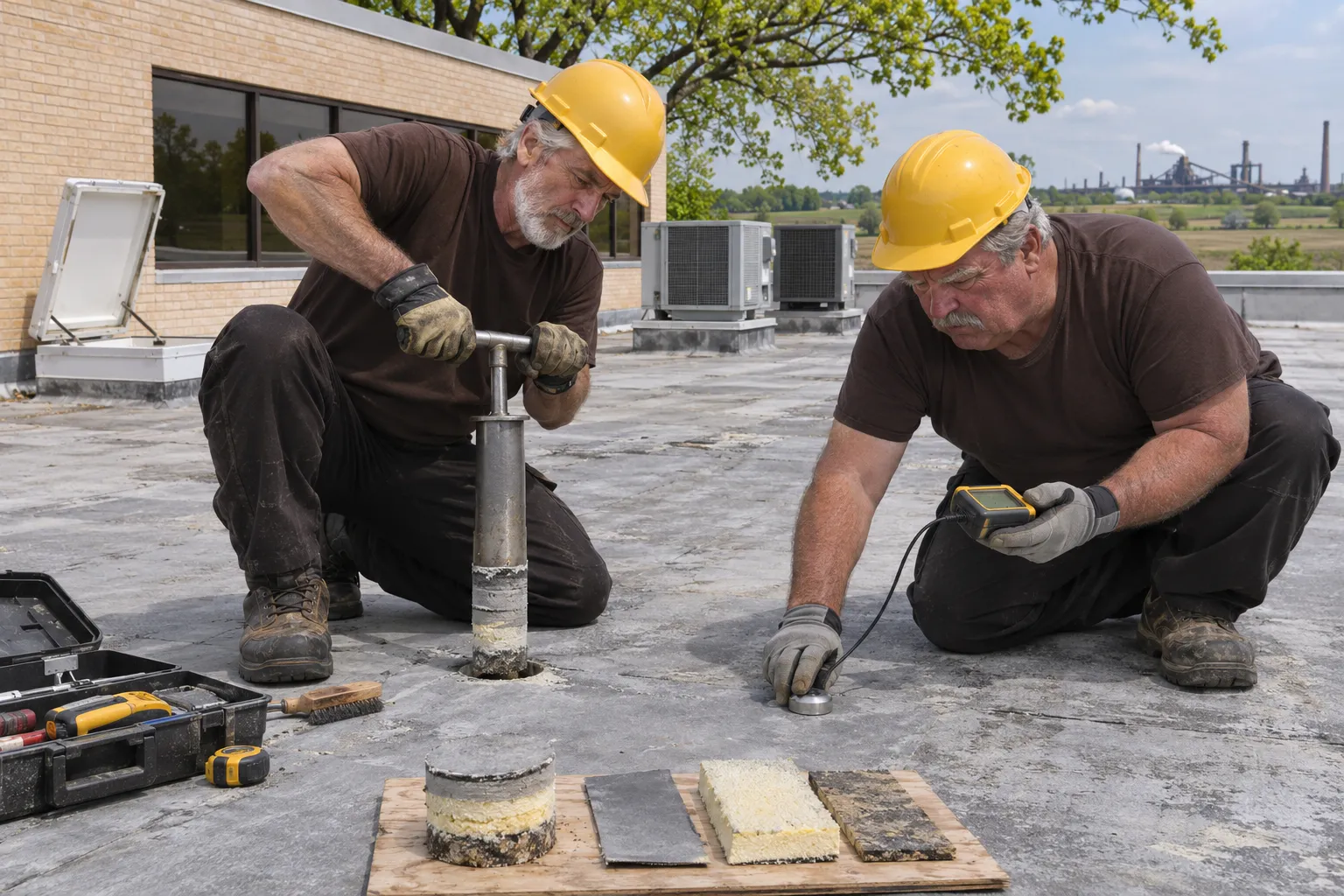
Ponding rings, wet gravel, and soft areas get marked first, since standing water points to the drains and seams most likely leaking.
A small core shows the layers, how many roofs are stacked, and whether the insulation around the leak is wet or dry.
Drains are cleaned, failed seams are opened, and wet board is removed back to dry material on all sides.
New insulation goes in and a patch of the same membrane type closes the area, welded or taped past the old edge.
Water is run across the repaired drain or seam to confirm it holds, and photos go to you with the notes.
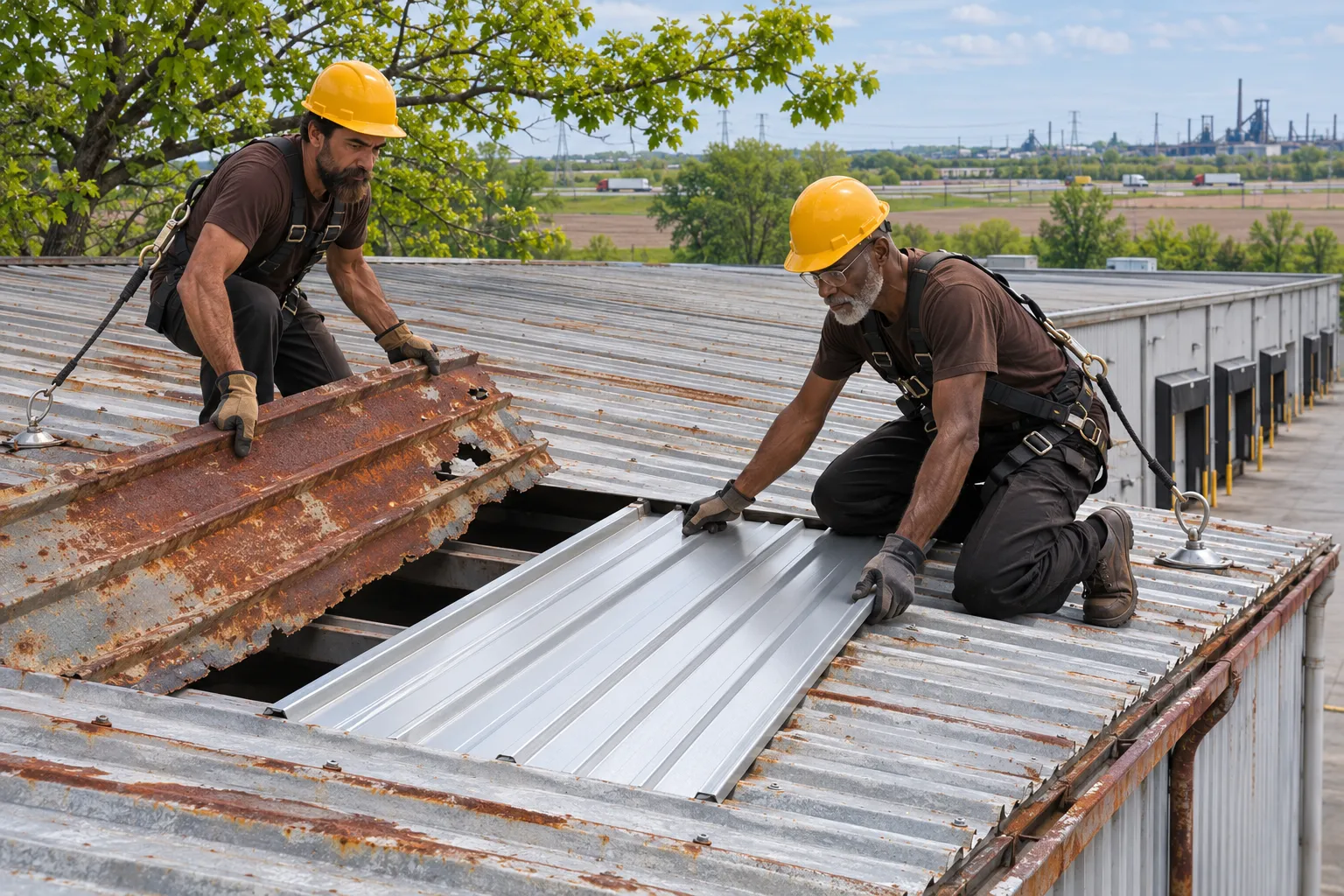
Flat roofs often share a building with metal sections, rooftop units, or plant equipment. These repairs cover the rest.
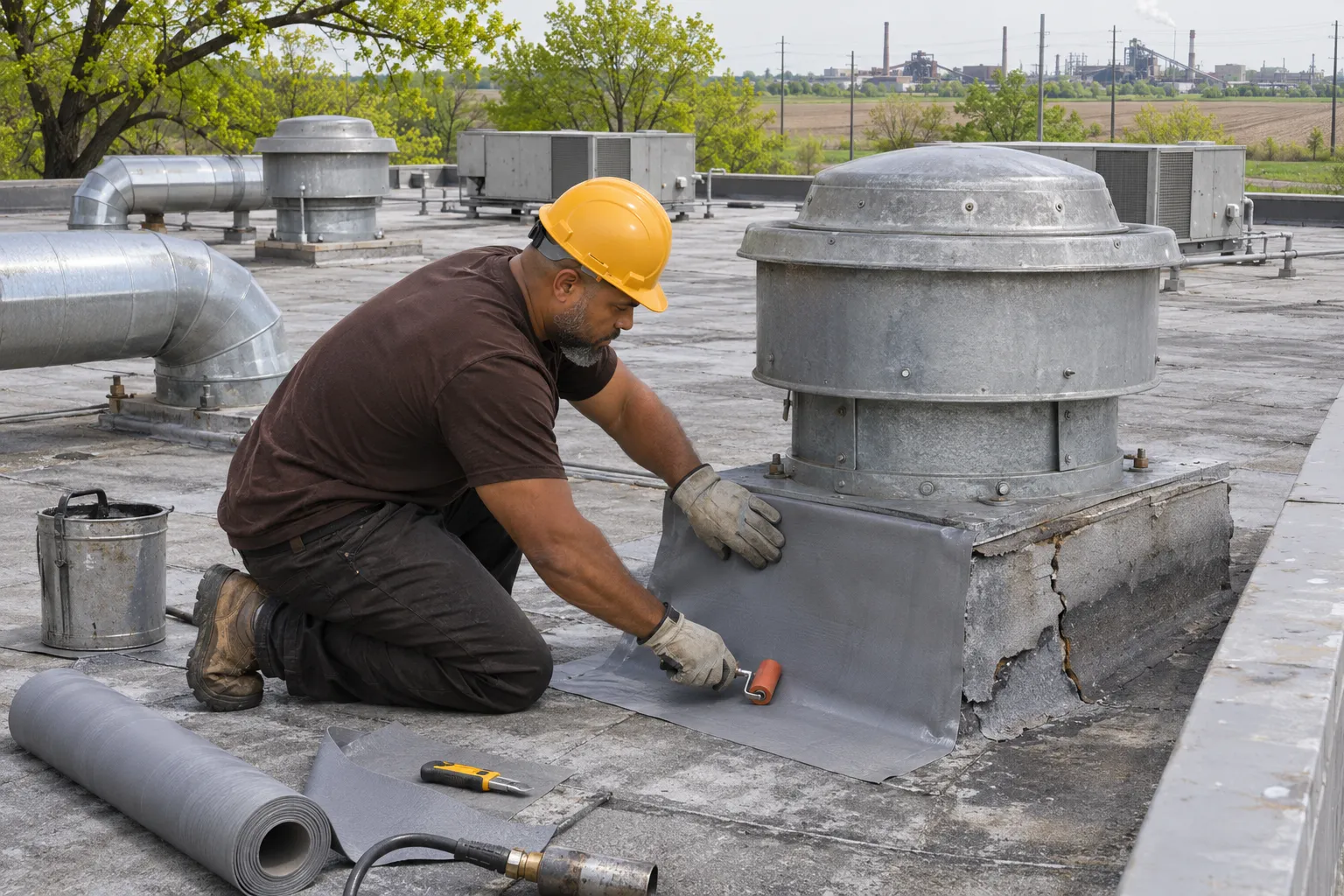
Short answers to the questions owners ask most about low-slope roofs.
Hard rain fills the roof faster than the drains empty it, so water rises to heights light rain never reaches.
Once it climbs past low flashing, an open lap, or a poorly sealed pipe boot, it gets in. We check drain size, debris, flashing heights, and the seams nearest the leak.
Repair starts by finding why water sits there: a blocked drain, a sagging deck, crushed insulation, or too little slope.
Then the drain is cleared or rebuilt, damaged board is replaced, and tapered insulation or a cricket steers water to the outlet. Less standing water means less wear and less weight on the deck.
A patch fits a puncture or a failed seam surrounded by dry insulation.
Replacement fits when patches keep failing, wet board has spread through bays, or the membrane cracks when folded. Core cuts or a moisture scan show which side of that line your Portage roof sits on.
Debris comes out first, then missing strainers and clamp-ring bolts are replaced and the membrane is reseated under the ring.
Cracked bowls are swapped, and a drain sitting higher than the roof around it gets the insulation reworked so water flows in. Snowmelt and heavy rain both depend on these outlets.
Yes. Heat dries sealant and shrinks older membrane at walls and curbs, which opens gaps around rooftop units.
Retail centers carry many units, so curb flashing is a frequent leak point. We reseal curbs, replace cracked sealant, and reset shrunken flashing before it starts dripping into a store.
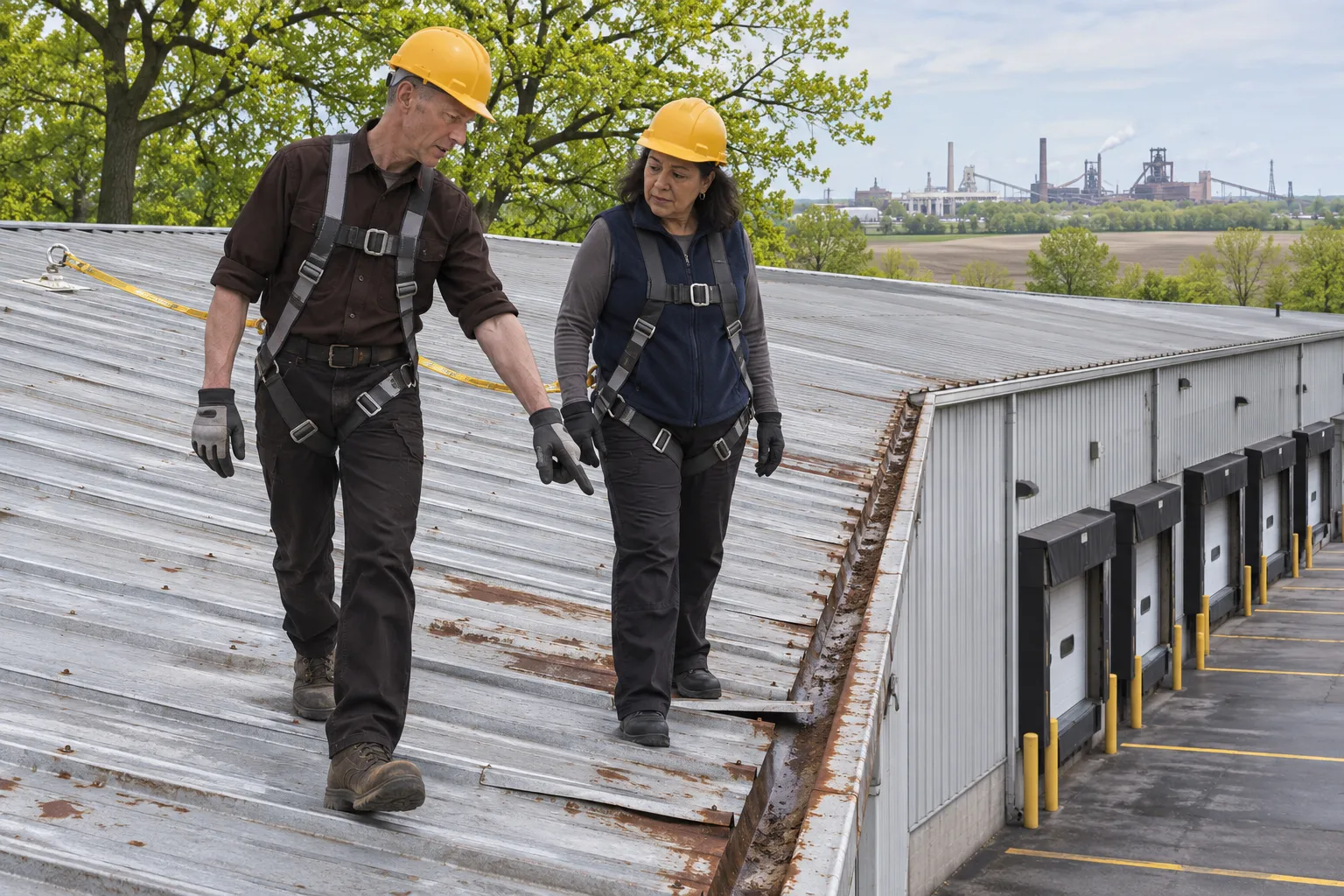
Tell us where water stands or drips and what membrane covers the roof. We will walk it, core it, and price the repair.