Stacked Patches
Patches Over Patches
Layers of patch material build ridges that trap water at their edges and hide where it gets in.

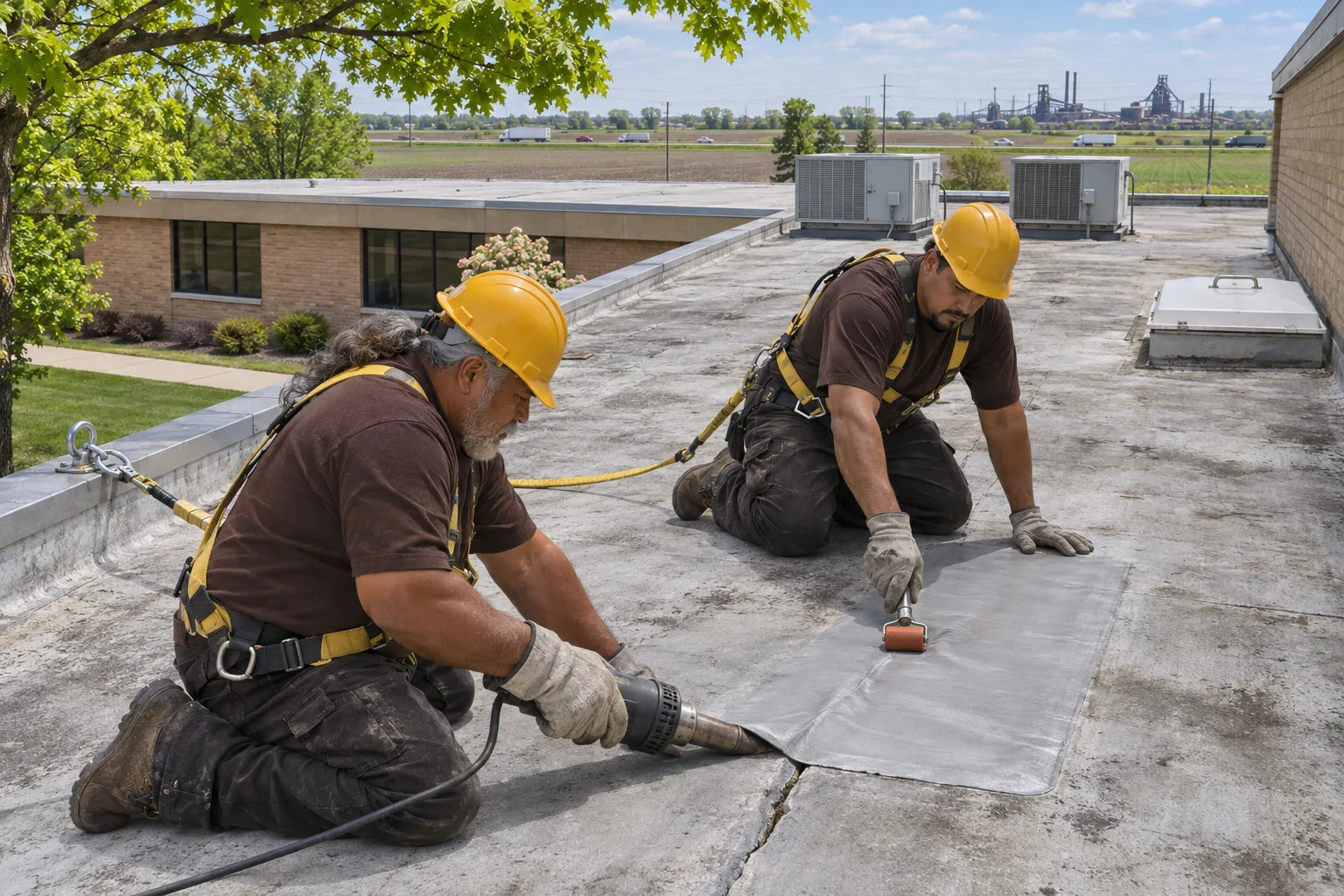
As a Lake Station commercial roof repair contractor, we sort years of old patches into what holds and what fails, then repair seams, curbs, and drains on shop roofs.
Lake Station commercial roof repair often starts on a roof that already carries a decade of patches from different hands.
Old patches tell a story. Some still bond tightly and can stay; others hold water at their edges and feed the leak you are chasing now. Many were laid with asphalt cement over single-ply membrane, which softens the sheet underneath and lets the patch slide off over time.
We test each patch area, core the ones that feel soft, and give you a map of which patches to keep, which to replace, and where the real leak sits. Wet board under failed patches comes out so new repairs go down on dry insulation.
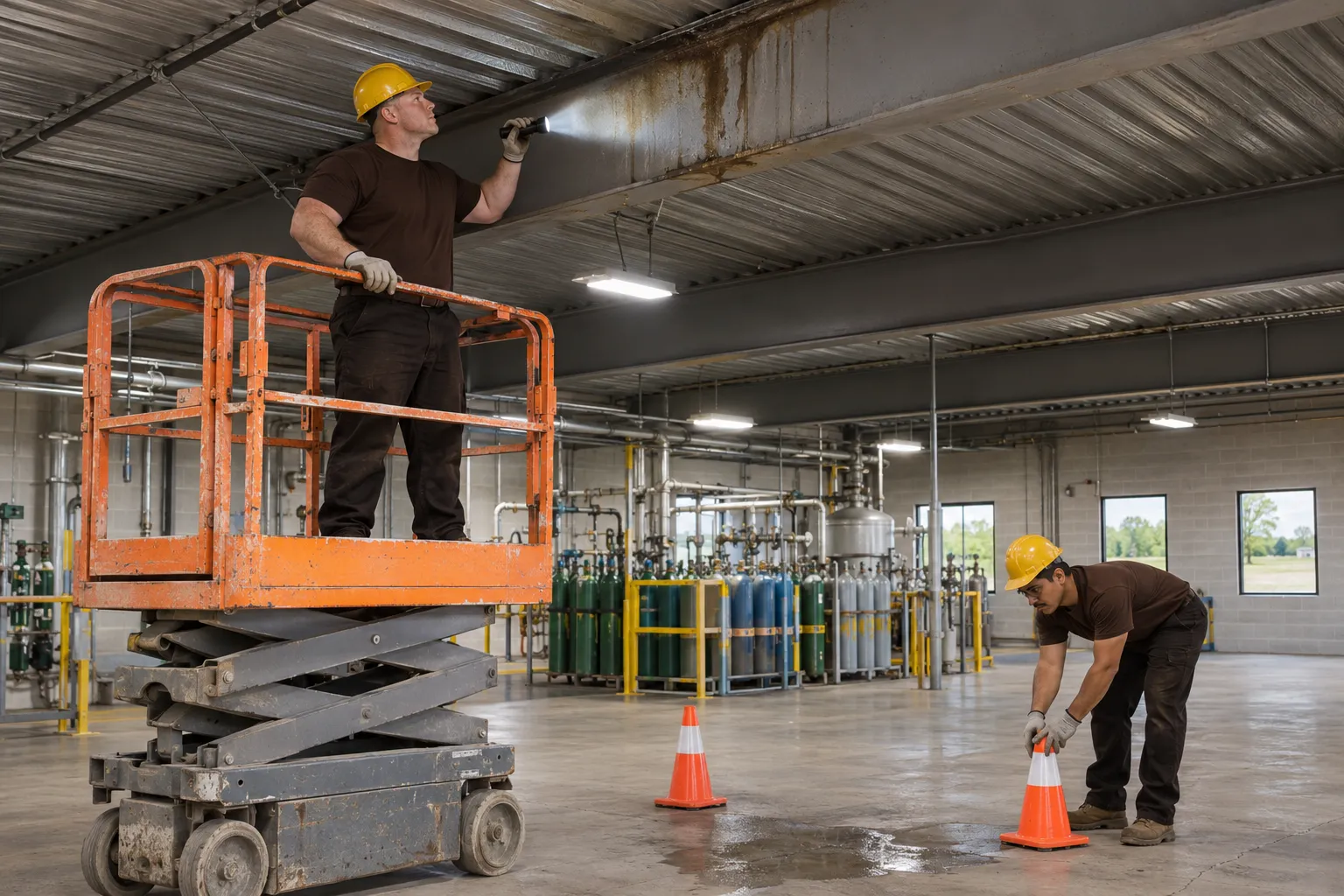
Older shop and storage roofs show the same signs of patch-on-patch repair.
Layers of patch material build ridges that trap water at their edges and hide where it gets in.
Patches set over wet board keep the moisture in, and the soft area grows a little each season.
Asphalt mastic smeared on single-ply membrane breaks down the sheet and lets the patch slide.
Repeated layers around a drain lift the roof surface above the bowl, so water pools instead of draining.
Curbs on older units carry hand-troweled sealant instead of flashing, and it cracks every winter.
Metal additions on older shops lose washers and rust at the laps where they tie into the flat roof.
On a heavily patched roof, the call gets made patch by patch before it gets made for the whole roof.
| Check | Keep Or Repair | Time For A New Roof |
|---|---|---|
| Patch bond | Most patches tight at the edges | Most patches lifting or holding water |
| Moisture | Wet board in a few small areas | Wet board under most patch zones |
| Materials | Patches match the membrane | Mixed mastics and sheets everywhere |
| Drains | Drains still sit low | Drains buried by repair layers |
| Curbs | Flashed curbs with sealed corners | Hand-sealed curbs cracked all around |
Clearing up a roof's repair history makes the next decision easier.
You learn which old repairs hold, which fail, and where the active leak really is.
Wet insulation under failed patches comes out and gets replaced with dry material.
New patches match the membrane, so they bond instead of sliding like the old mastic.
Knowing what holds tells you how long repairs can carry the roof before replacement.
Repeat leaks under old patches usually start somewhere else. Call and we will trace it from scratch.
Outside Lake Station? Call us or send us a message. We repair roofs in the towns below as well.
Office and multi-building roofs, inspected together in one visit.
Lake wind at edge metal and snow at the drains.
Retail strip roofs, repaired around store hours and tenants.
Metal roofs with skylights, ridge caps, and wall flashing.
An old roof gets sorted before anything new goes on it.
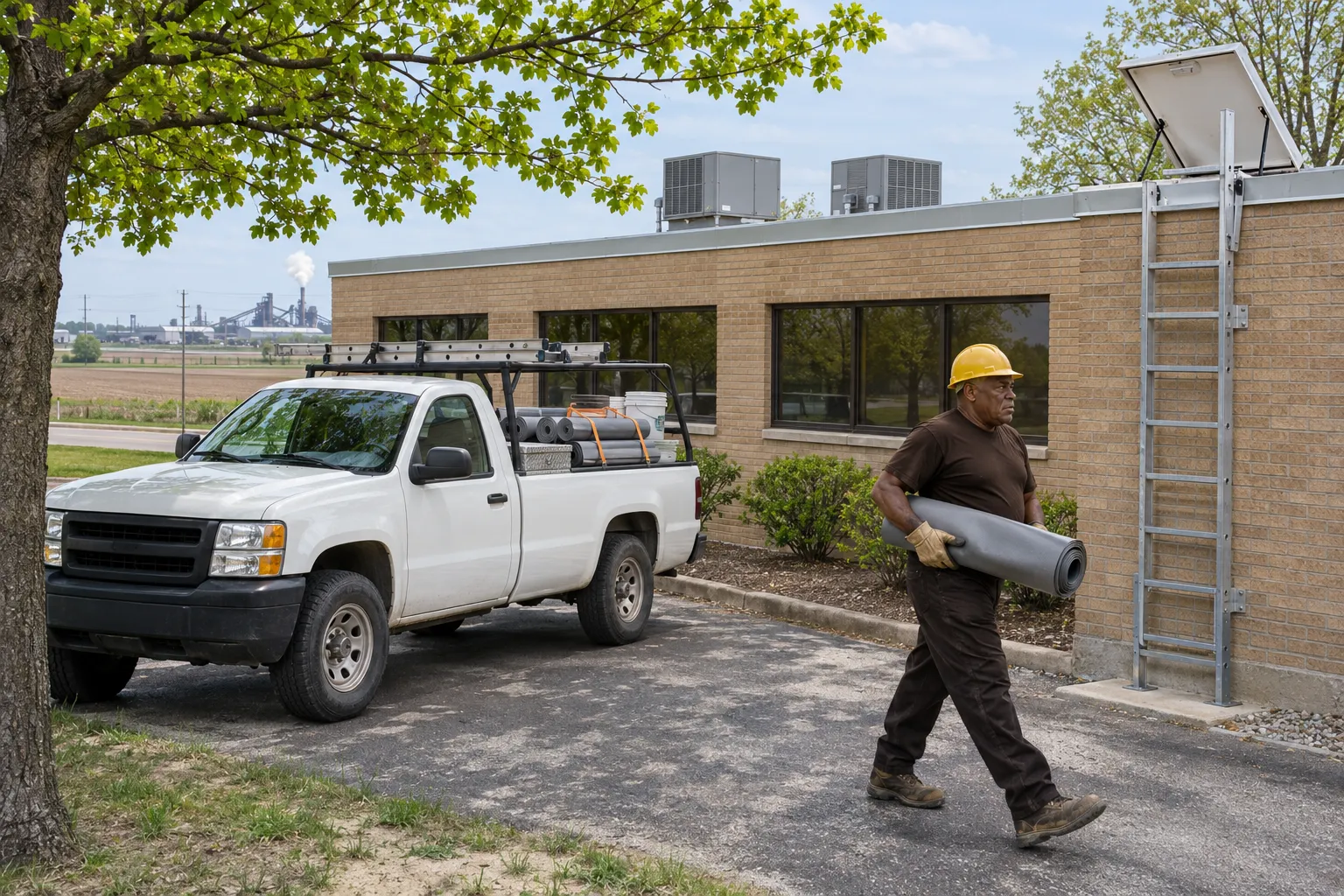
Each patch area is located and marked, along with the leaks the owner already knows about.
Patch edges get probed for lift, and soft spots get cored to check the insulation under them.
Failed patches, incompatible mastic, and wet board come out down to dry, clean material.
Matching membrane patches go in, drains get reset low, and old hand-sealed curbs get real flashing.
You get photos of every patch kept, removed, or added, so the next repair starts from a clear roof history.
Answers for owners of older shop, storage, and light industrial roofs.
Yes. Industrial and commercial roofs in Lake Station are part of our work, from shops and storage buildings to light industrial properties.
We trace leaks, repair failed seams, curbs, and drains, and replace wet insulation, with the work scheduled around operations inside the building.
Every old patch gets tested for bond and moisture before deciding whether it stays.
Patches that hold are left alone, failing ones come out with any wet board beneath them, and the real leak gets a matched repair. The keep-or-replace list comes with photos of every patch area we tested.
Lake Station sits right next to Portage, so visits there are short trips for us.
Call or request an estimate with the address and how long the roof has been leaking. A short note on past patches, and who laid them, helps us plan the first roof walk.
Choose one who traces the leak before patching and explains which old repairs can stay.
Ask for photos and a list of what was removed, so the next repair starts from a known record. That record keeps the next roofer from patching over a seam that already failed twice.
Often, yes. Asphalt-based cement softens single-ply membranes like TPO and EPDM, and the patch eventually slides or lifts.
We cut out the mastic, clean the sheet, and patch with matching membrane so the repair bonds.
That depends on how much of the roof is dry and how many patches still bond.
A roof with a few wet spots and solid patches can run several more seasons on repairs. One where most patch zones are wet is closer to replacement, and the moisture readings will show it.
The methods match, but timing matters more, since cold decks make welding and adhesives harder in winter.
Leaks get temporary seals in cold months, and full membrane repairs go in once the deck warms up in spring.
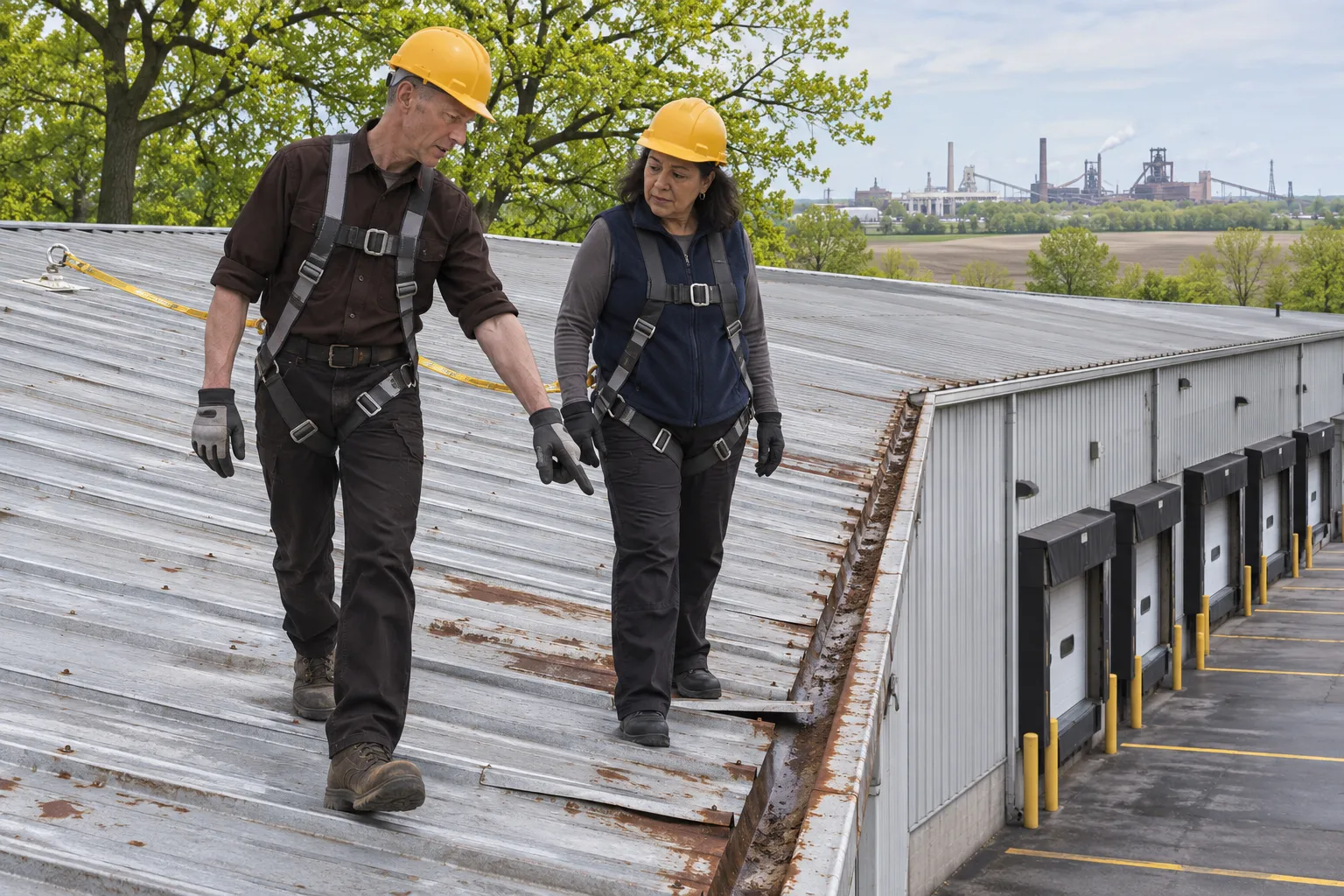
Tell us how long the roof has leaked and how many times it was patched. We will sort it out and price the repair.