Fasteners
Cracked Screw Washers
Rubber washers harden and split with age, and each one lets a thin line of water run down the screw shank.

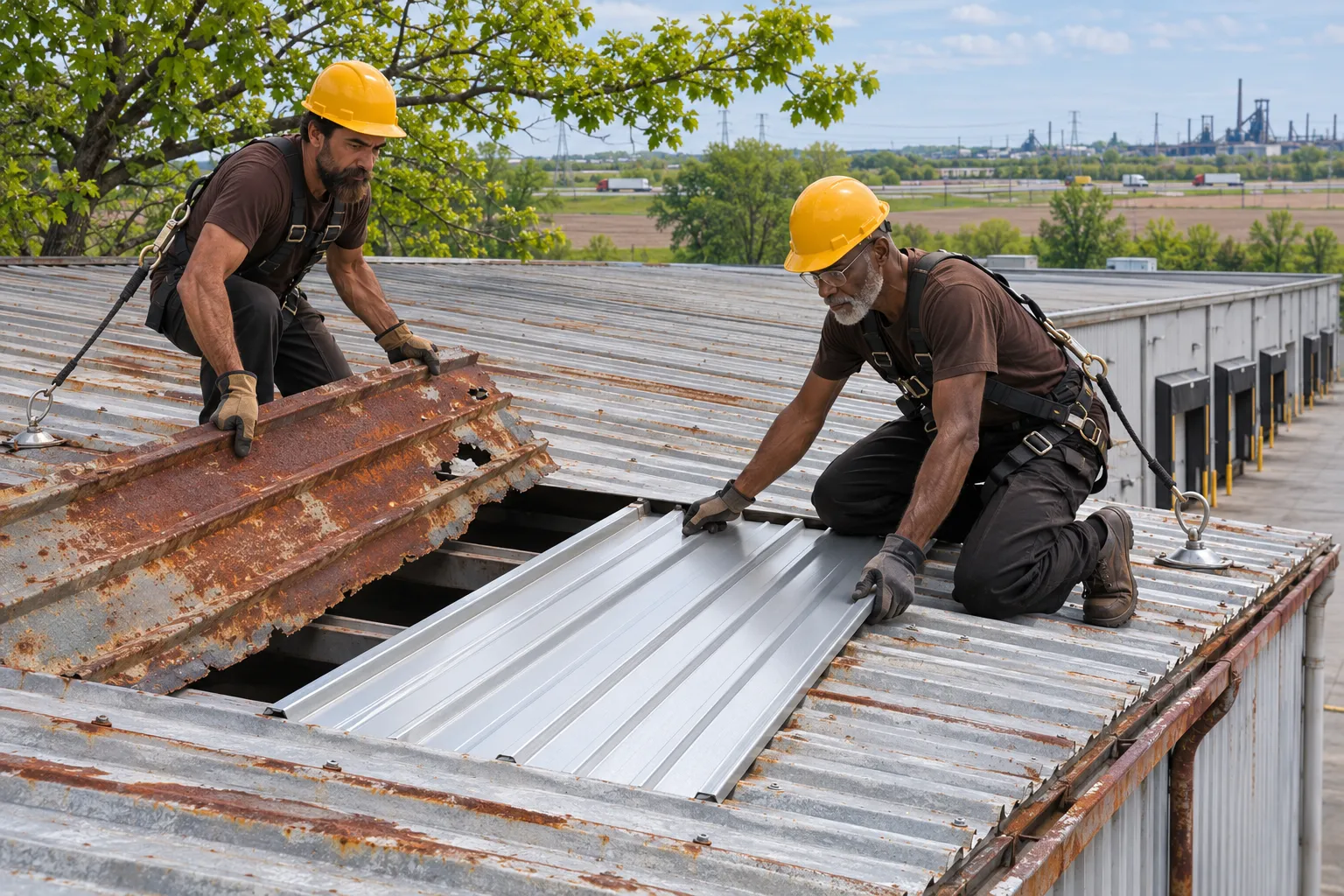
As a Portage commercial metal roof repair contractor, we replace worn fasteners, seal laps, and swap rusted panels on shops, plants, and warehouses.
Portage commercial metal roof repair covers most leaks on a ribbed or standing-seam roof. The panels themselves decide when repair stops making sense.
| Check | Repair Fits | Look At Re-Roofing |
|---|---|---|
| Steel | Surface rust that brushes off to firm metal | Rust holes along whole panel runs |
| Fasteners | Washers cracked in one area of the roof | Screws stripped across most of the purlin lines |
| Laps | Sealant failed at a few end laps | Laps separating along every run after past resealing |
| Purlins | Purlins under the leak are solid and straight | Purlins corroded or bent in several bays |
| Panel profile | Matching panels are still made for this rib | No matching profile, so patches would need custom fabrication |
Steel roofs move every day with the temperature. These are the details that give out first.
Rubber washers harden and split with age, and each one lets a thin line of water run down the screw shank.
Expansion and wind loosen the overlap where two panels meet, and the old sealant tears away from the steel.
Lake air and mill dust settle on cut edges and laps, where rust starts and thins the panel from underneath.
Plastic skylight panels crack and their closures shrink, leaving gaps at the ribs above the plant floor.
Closures behind the ridge cap and wall flashing loosen, letting wind-driven snow and rain into the building.
Spring hail dents ribs and breaks washers, damage that is hard to see until water finds the opening.
Metal repairs are mostly about attachment and overlap. These are the five we use most.
Leaking screws come out and oversized screws with new washers go in, gripping fresh metal in the old hole.
Laps are cleaned to bare metal and sealed with butyl tape, sealant, or fabric-reinforced mastic sized to the seam type.
Rusted panels are lifted out, the purlins checked, and new panels of the same profile and gauge are lapped and fastened.
Cracked skylight panels are replaced with matching profiles and new closures sealed at each rib.
Ridge caps, closures, and wall flashing are refastened or replaced so wind cannot push water under the trim.
A drip that follows a rib usually starts at a fastener or lap uphill of it. Call and tell us where it lands inside.
Fixing attachment and laps keeps a steel roof doing its job for more seasons.
New oversized fasteners clamp panels to the purlins again, so wind and snow stop working them loose.
Treating surface rust and sealing laps keeps water off the steel edges where corrosion spreads.
Replacement panels in the same profile and gauge lap correctly with the roof that stays.
Repairs happen from above, so the shop floor and docks keep running underneath.
Metal leaks travel, so the process starts inside and works uphill.
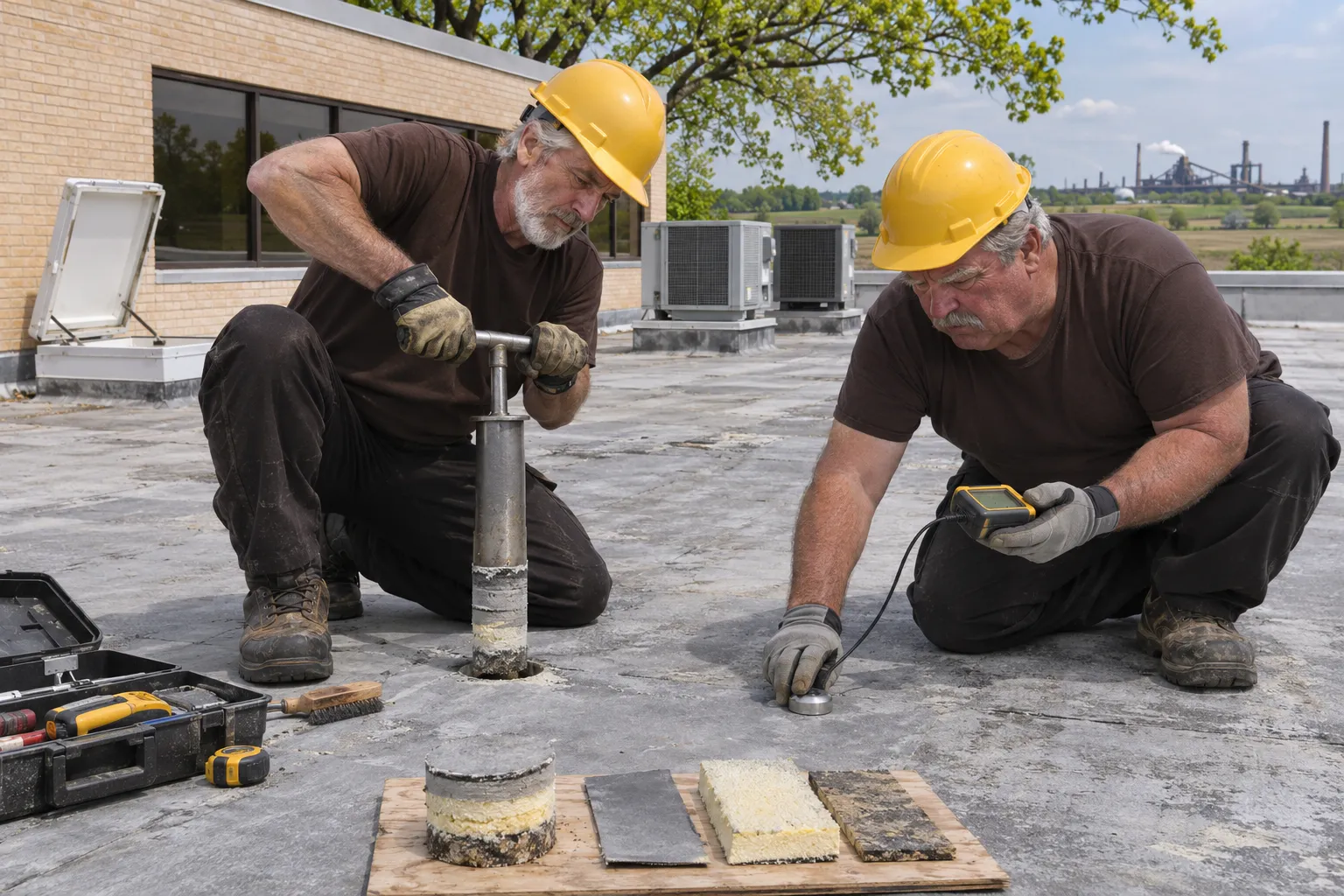
Inside, we note which rib or purlin the water follows, since it often enters several feet uphill of the drip.
Screws around the leak get checked by hand; neighbors usually share the same worn washers as the leaking one.
Suspect laps are opened and cleaned to bare metal so new sealant or tape bonds to steel and not old residue.
Rusted panels come out, matching panels go in, and oversized fasteners close the area along the purlin lines.
A hose test confirms the repair, and you get photos showing each fastener run and lap that was redone.
Many metal buildings also carry a flat office roof, plant equipment, or a leak that needs tracing first.
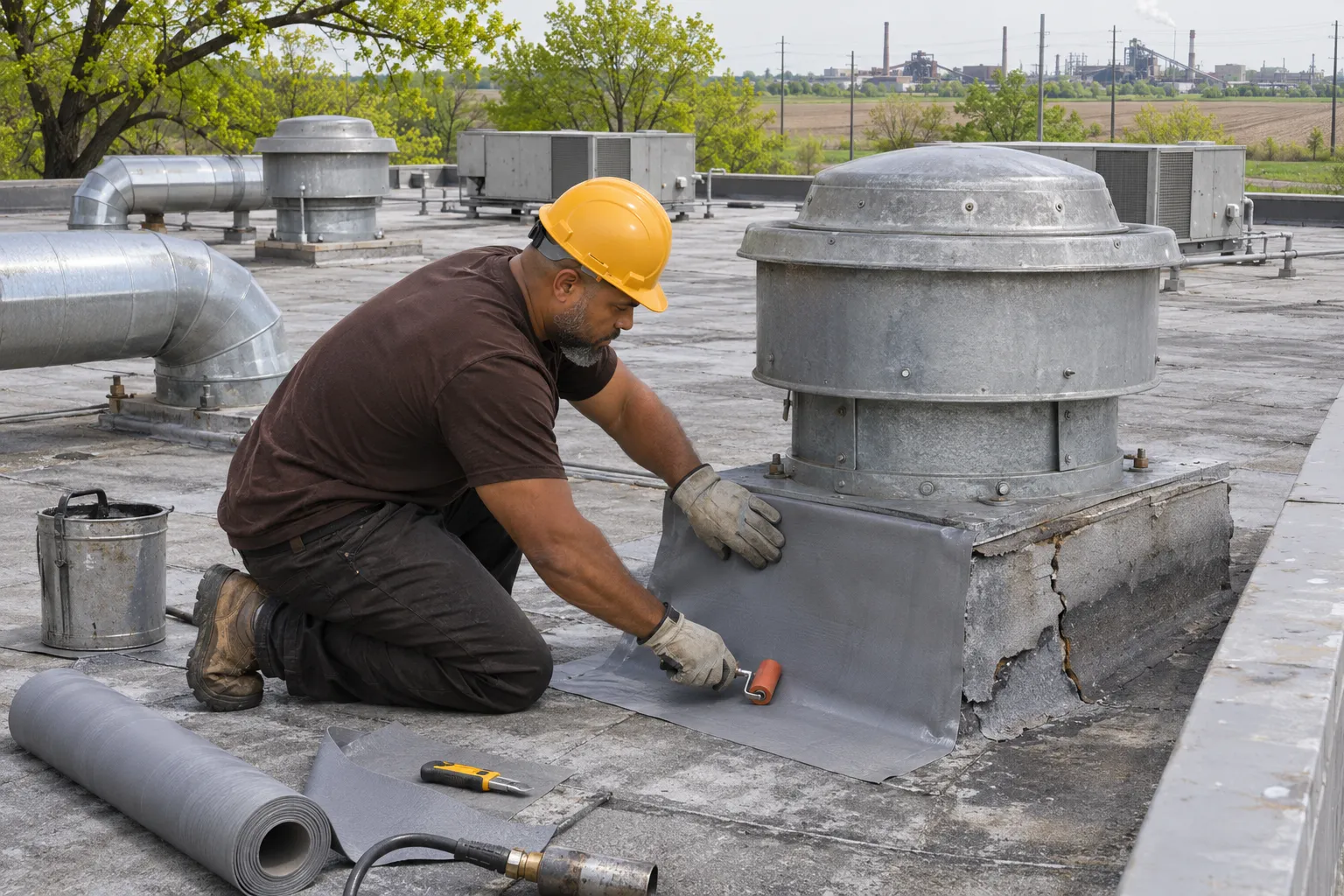
Answers about fasteners, laps, rust, and storm damage on steel roofs.
Worn fasteners. Washers crack with age and screws loosen as panels expand and contract.
Open laps, rusted edges, and failed flashing come next. Near the lake, moisture speeds rust at cut edges on Portage roofs, so those get checked on every leak call.
Each leaking screw comes out and an oversized screw with a new washer goes in to grip fresh metal.
Holes worn too large get a sealed patch first. We usually replace every aged fastener in that run, since the screws beside a leak share the same tired washers.
Fasteners come out, the rusted panel lifts free, and the purlins underneath are checked for corrosion.
A new panel of the same profile and gauge goes in with fresh fasteners and sealed laps. Neighboring panels with only surface rust are treated in place.
Open seams are cleaned to bare metal, then sealed with butyl tape, sealant, or reinforced mastic chosen for the seam type.
Lifted standing seams are re-crimped where the metal allows. We also check the clips and fasteners holding the seam, because loose attachment is often why it opened.
Hail dents ribs, cracks sealant, and breaks fastener washers, and most of it is hard to spot from the ground.
After a storm we walk the roof, mark damaged fasteners and laps, and photograph everything so the record is ready if you file an insurance claim.
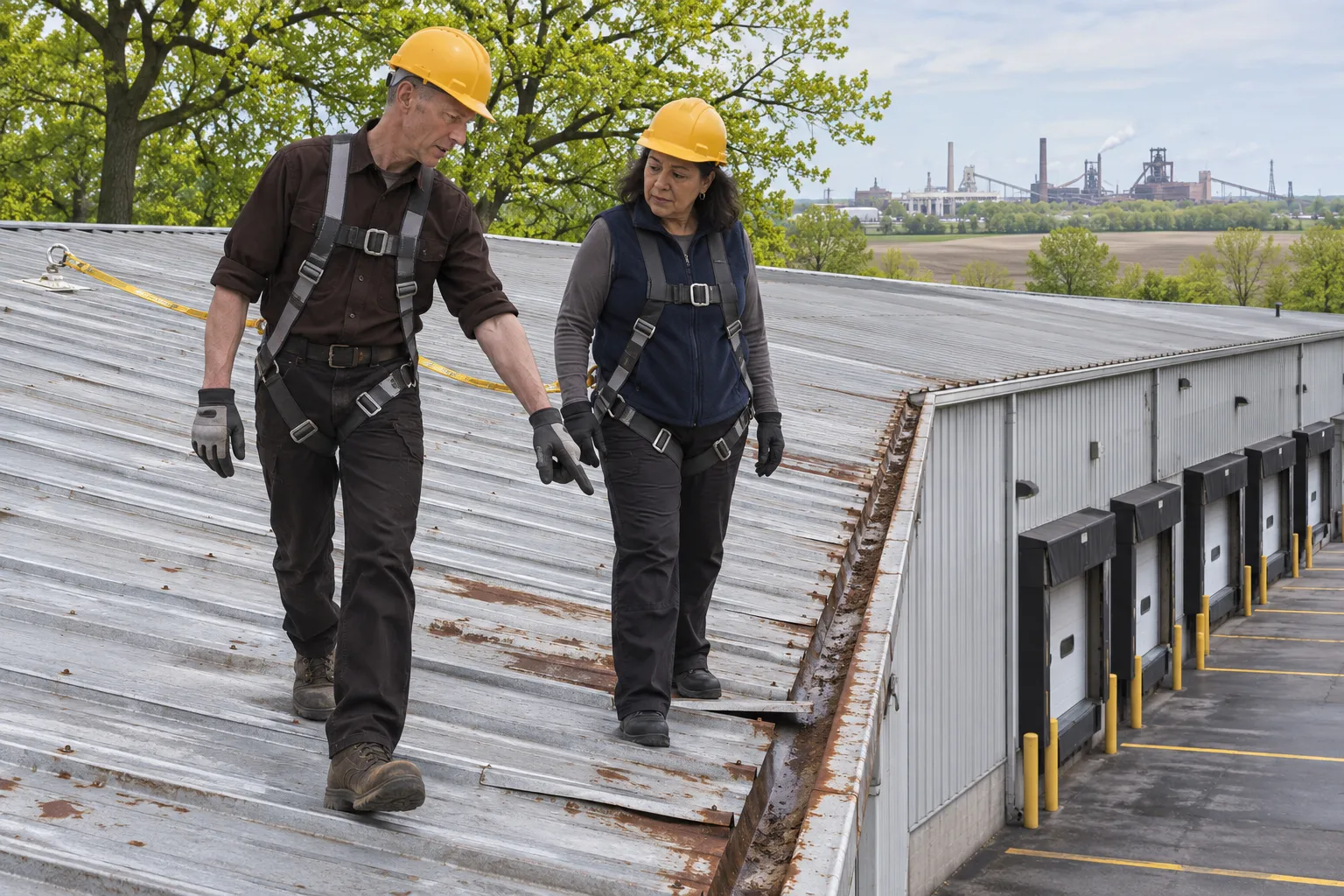
Send the address and where the water lands inside. We will trace it along the ribs and price the repair.