Rooftop Units
Leaks Around Unit Curbs
Cracked curb flashing, open corners, and condensate draining onto the roof put water right beside the unit opening.

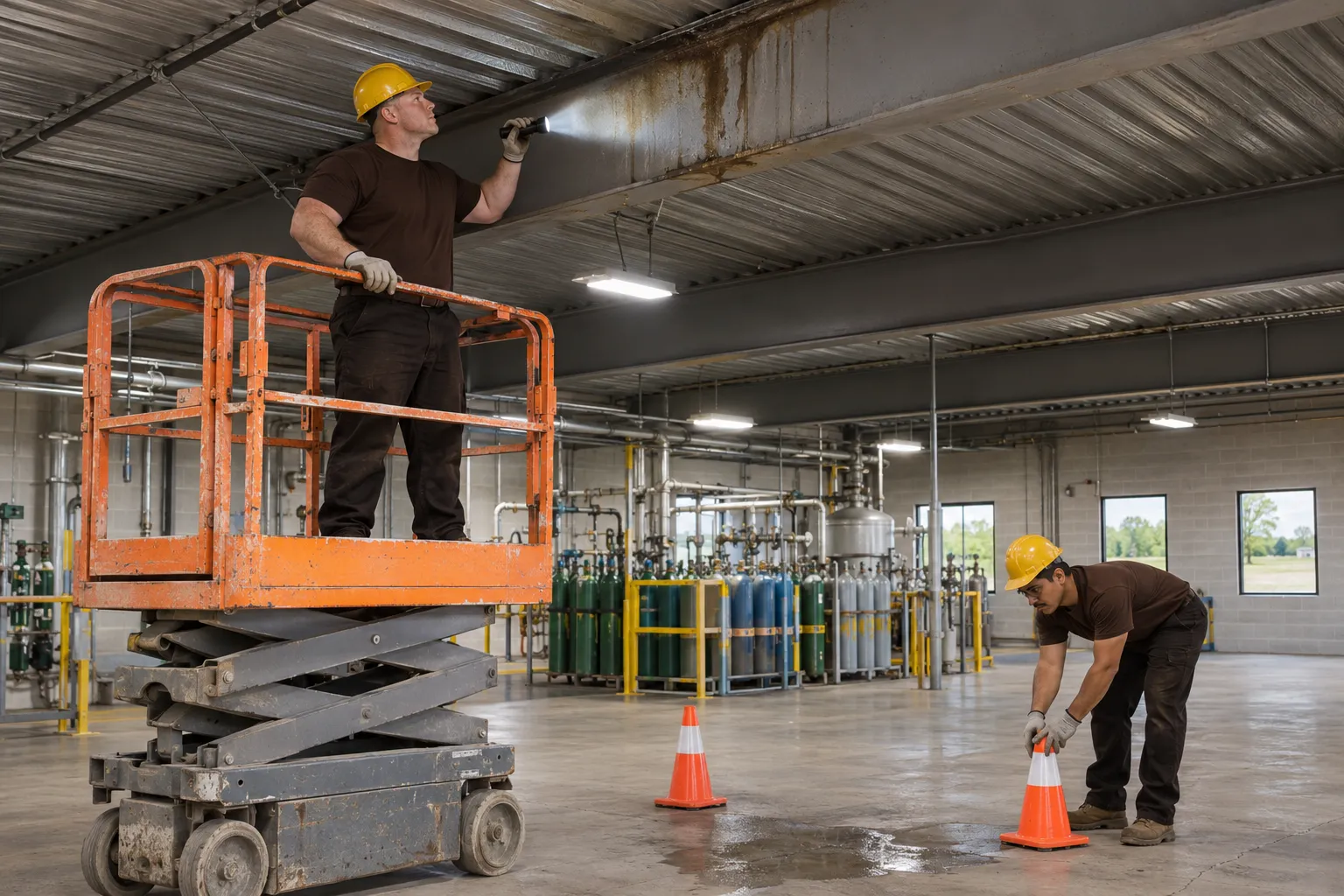
As a Portage commercial roof leak repair contractor, we follow water from the stain inside to the seam, drain, or curb letting it in, then repair that spot.
Portage commercial roof leak repair works when water enters at a few details. A roof that leaks everywhere at once points toward bigger work.
| Sign | Leak Repair Fits | Look At Larger Work |
|---|---|---|
| Where water shows | One or two drip points that repeat in the same spots | New drip points appearing across the building every storm |
| When it leaks | Only in hard rain, wind from one side, or snowmelt | Any rain at all, even light showers |
| Roof surface | Membrane or panels intact away from the leak | Cracked, brittle, or rusted-through surface across the field |
| Insulation | Wet board limited to the area around the entry | Moisture readings showing wet board through many bays |
Most leaks start at the same few places. These are the entry points we find most often above stained ceilings.
Cracked curb flashing, open corners, and condensate draining onto the roof put water right beside the unit opening.
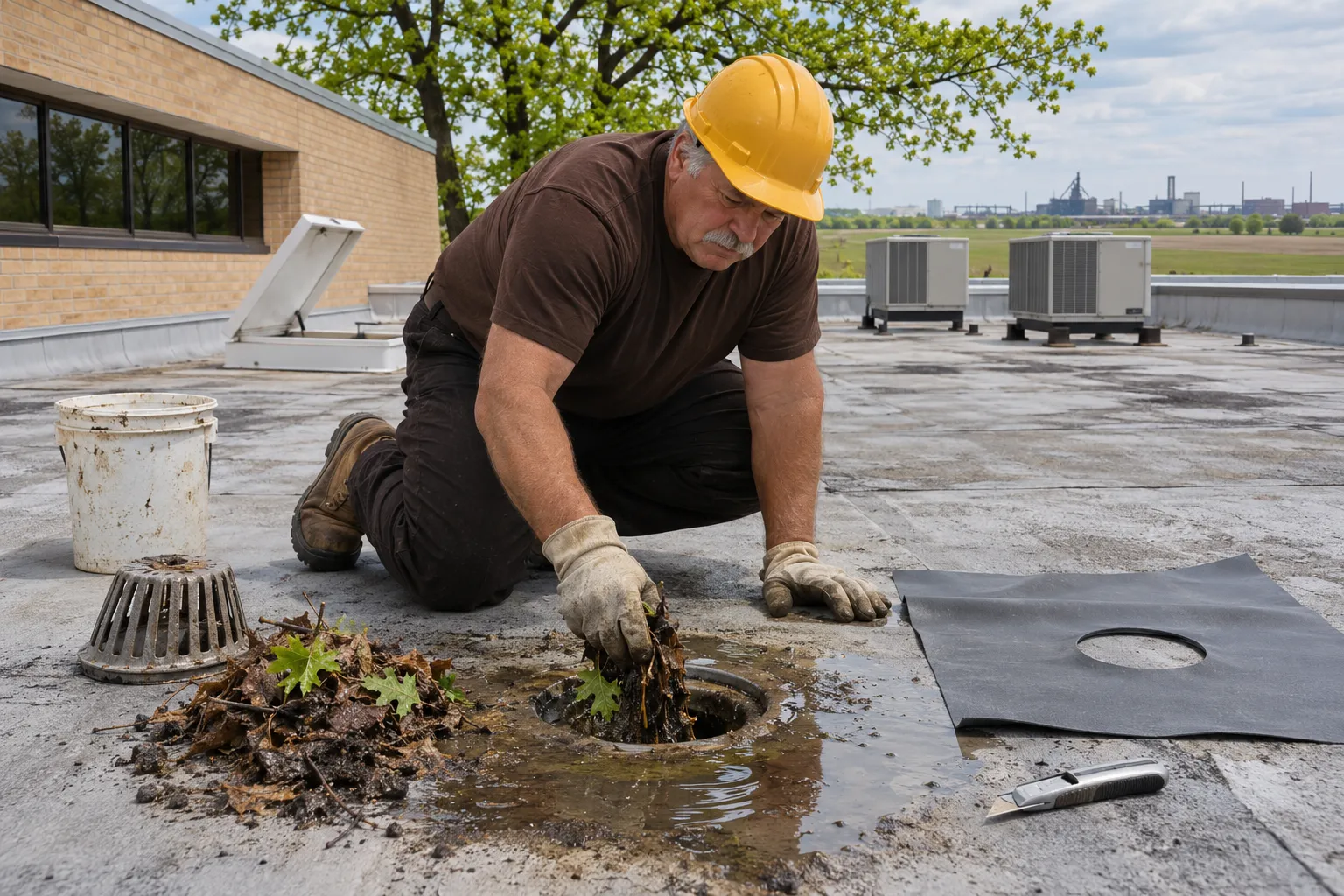
A slow drain lets heavy rain rise over low flashing, so the leak shows up only during hard storms.
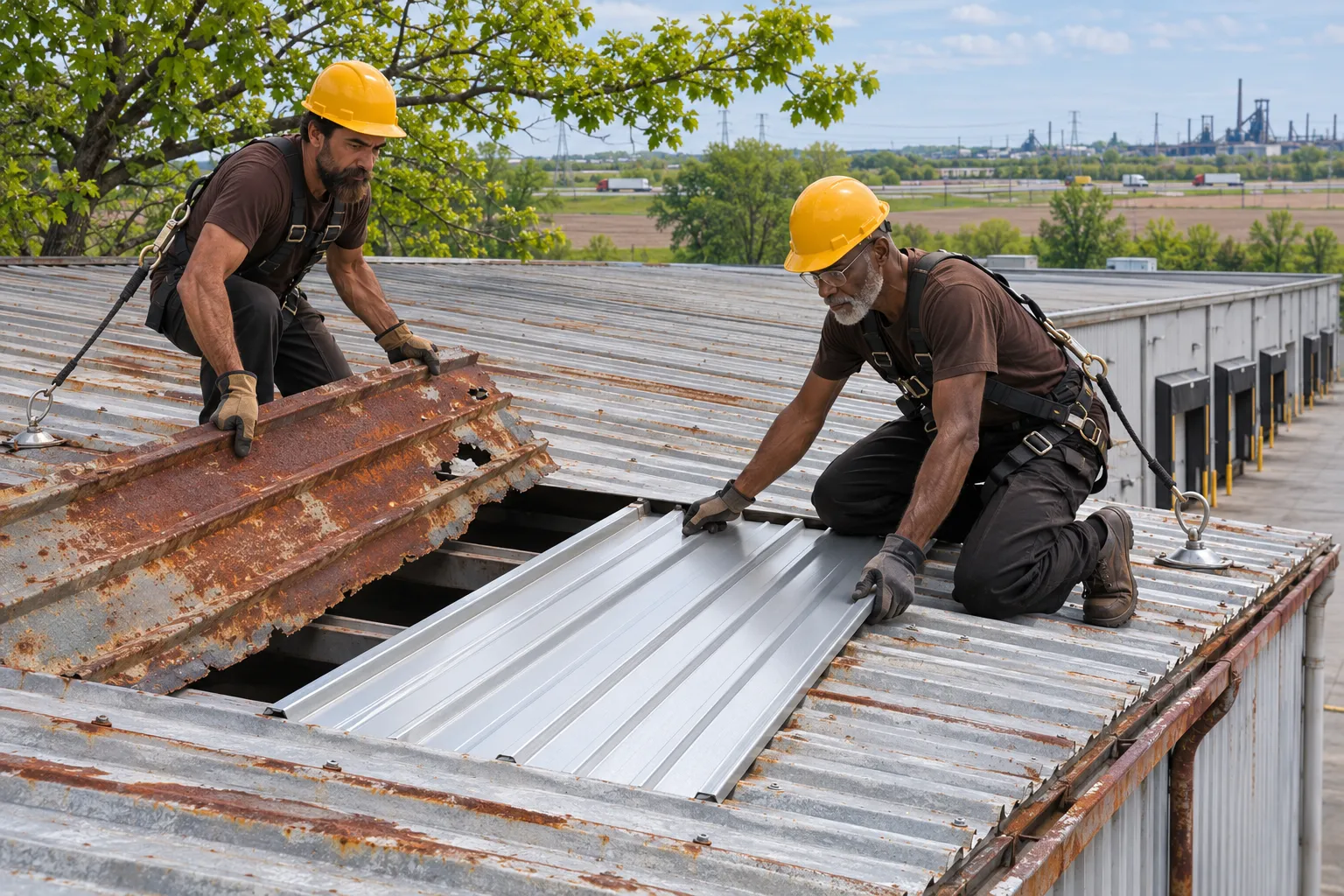
A lifted lap lets water under the sheet, and it travels along the deck flutes before it drips inside.
Curbs around skylights and roof hatches lose their sealant, and water runs down the curb into the room below.
Snow piled in parapet corners melts slowly, refreezes, and forces water behind flashing that sheds rain fine.
Rubber boots around pipes, gas lines, and conduit split in the sun and leave a ring of open deck.
Once the entry point is confirmed, the repair matches the detail that failed.
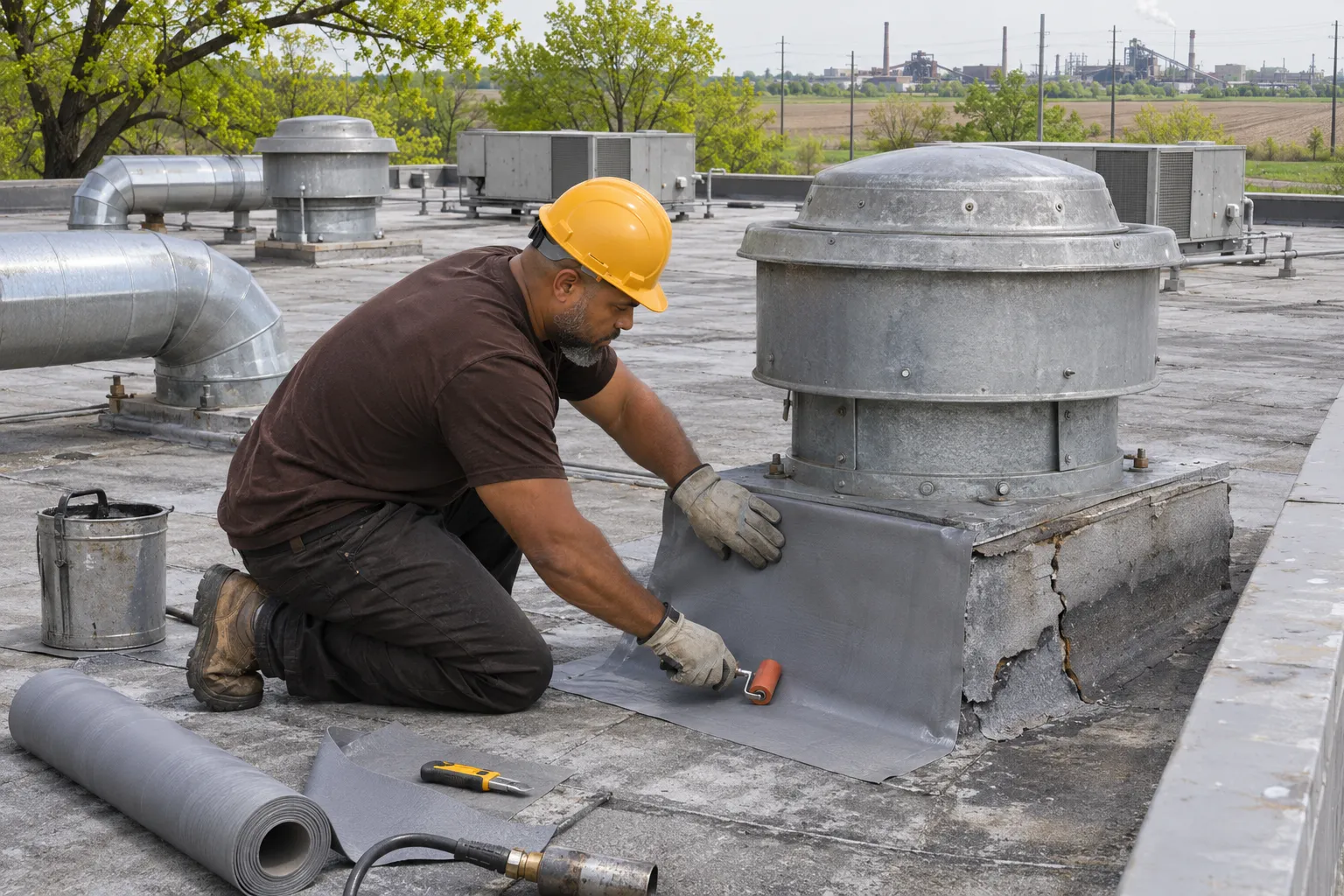
Unit and fan curbs get new membrane flashing with sealed corners, and condensate lines are rerouted away from seams.
An open lap is cleaned, dried, and welded or taped shut with a cover patch running past both sides.
Split boots are cut out and replaced with new flashing sleeves clamped and sealed at the top.
Skylight and hatch curbs are stripped of old sealant, reflashed, and sealed at the frame.
Insulation soaked by the leak comes out so the deck dries and the new patch sits on dry material.
Note where it drips and when: hard rain, wind, or melting snow. That timing points us toward the entry before we climb up.
Finding the real entry point keeps one leak from turning into three.
Fixing the entry stops water from spreading through insulation and corroding the deck below it.
Inventory, equipment, and offices under the drip stay dry once the right seam or curb is sealed.
Tracing before patching avoids caulk smeared on the wrong detail while the real leak keeps running.
Photos of the entry and the fix help with tenants, insurance, and the next roof decision.
Water rarely drips straight below where it enters. These steps close the gap between the two.

Drips, stains, and wet floors are marked and photographed so the roof search starts from known points.
Leaks that appear only in hard rain, wind, or melt each point to different details on the roof.
On the roof, seams, curbs, boots, and drains above and uphill of each mark get checked by hand.
A controlled water test or moisture meter confirms the entry before any patching starts.
The failed detail is fixed, wet board replaced, and the same test is run again to prove it holds.
Once the source is known, the fix often belongs to one of these repairs.
Answers about heavy-rain leaks, warehouse leaks, unit curbs, cost, and snow.
No. A roof in good shape keeps water out in hard storms too.
Leaks that show only in heavy rain point to drains that fall behind, water rising over low flashing, or seams and boots that open under pressure. We trace those from the drains up.
Mark where water shows inside, then search the roof above and uphill, since water follows deck flutes and purlins before it drips.
Port logistics warehouses in Portage cover big footprints, so we check seams, fasteners, curbs, skylights, and drains near each mark and confirm with a water test or moisture scan.
Unit leaks usually come from cracked curb flashing, open corners, failed sealant at the base, or condensate draining onto the roof.
We reflash the curb, seal the corners, and route condensate lines away from seams. The unit panels and ductwork get checked too, since water can enter through the equipment.
Price follows how hard the leak is to trace, the roof type, how much material gets replaced, and whether wet insulation comes out.
Leaks at walls, curbs, and drains take more labor than a patch in the open field. The estimate is free, and it comes after we see the roof.
Heavy lake-effect bands off Lake Michigan reach Porter County, and the deep snow melts slowly into drains and parapet corners.
Meltwater refreezes overnight and pushes into seams and flashing. After big snows we check those corners and seal openings before the next storm.
Tell us where the water lands and when it shows up. We will trace it to the roof detail and price the fix.